Why Choose PTFE Rod Sheet for Industrial Applications?
Why Choose Ptfe Rod Sheet for Industrial Applications?
Industrial material choices are rarely made at a desk alone. They are tested against heat, chemical exposure, friction, and the pressure of daily production. Ptfe Rod Sheet is valued for its broad chemical resistance, low-friction surface, and electrical insulation properties. In a workshop, that can mean a machined seal that resists many process chemicals or a sheet lining that helps reduce sticking. The exact result depends on the grade, dimensions, operating conditions, and quality of machining.
Roy J. Plunkett, the chemist credited with discovering PTFE, is often quoted as saying, “I was not trying to invent anything.” His discovery reminds us that useful materials can have unexpected beginnings; choosing one for a specific job still requires careful engineering. PTFE is not a universal fix. Under sustained load, it can creep, and its thermal expansion may affect fit and alignment. Those details matter when a rod becomes a close-tolerance component or a sheet sits beneath a loaded assembly.
Check the service conditions. A supplier’s technical data and application guidance can help confirm whether a particular grade is suitable. Ask about temperature range, load, chemical contact, machining tolerances, and relevant test methods. Small details count. A sample part can reveal a poor fit before full production begins. I would also review the assumptions behind any material recommendation; specifications do not always mirror real operating conditions. With that practical scrutiny, Ptfe Rod Sheet can be a strong option for industrial components, rather than a name selected on reputation alone.
What Are PTFE Rods and Sheets?
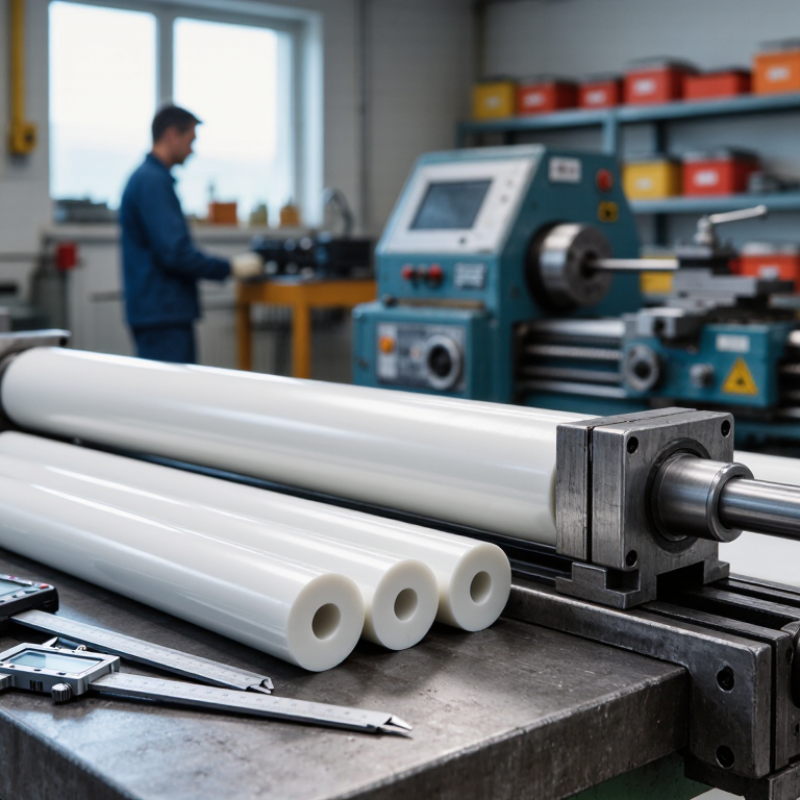
PTFE rods and sheets are solid stock forms made from polytetrafluoroethylene, a fluoropolymer valued for chemical resistance and low friction. Rods are typically machined into bushings, seals, and spacers; sheets can be cut into liners, gaskets, and sliding pads. ASTM D1710 covers extruded PTFE rod, while ASTM D4894 addresses molded PTFE basic shapes. These standards help buyers specify material forms, but they do not replace checking the part’s actual operating conditions.
The NIST Chemistry WebBook reports PTFE’s melting point at about 327°C. That number is not a safe continuous-use temperature: load, movement, and heat exposure also matter. In a workshop, a sheet may feel slick and stable, yet a tightly loaded gasket can slowly deform over time.
PTFE is not magic. Its low friction can help moving parts, but its tendency to creep may make it unsuitable where dimensions must remain exact under pressure. Engineers should review temperature, chemical contact, load, and tolerances before choosing rod or sheet stock. One overlooked detail is machining: thin sheet edges can distort, while poorly supported rods may flex during cutting.
Which Properties Make PTFE Suitable for Industry?
PTFE is valued in industry because it combines chemical resistance with a naturally low-friction surface. Acids, solvents, and moisture affect it less than many common engineering plastics, though compatibility still depends on the chemical, temperature, and exposure time. In a pump, a PTFE seal can help reduce sticking as parts move through repeated cycles. It feels almost slippery to the touch.
Its broad service-temperature range and electrical insulating ability also make PTFE useful around heated equipment and electrical assemblies. Rods can be machined into bushings, seats, and spacers, while sheets can serve as liners or gaskets. The material is non-wetting, which helps fluids release from surfaces and can simplify cleaning. Still, “chemical resistant” does not mean indestructible.
PTFE has limitations worth checking before specifying it. Under sustained pressure, it may deform gradually, a behavior known as creep or cold flow. It can also expand noticeably with temperature changes. That trade-off is easy to overlook. For a loaded bearing, a thin gasket, or a close-tolerance part, operating temperature, pressure, fit, and support all matter. A small sample test under real conditions can reveal issues that a data sheet alone may not show.
Where Are PTFE Rods and Sheets Commonly Used?
PTFE rods and sheets are used where low friction, chemical resistance, and electrical insulation matter. In chemical-processing plants, sheets can be cut into gaskets or used as protective liners around tanks and pipework. Rods are often machined into valve seats, spacers, and pump components that face corrosive fluids. These parts can reduce sticking and wear. They still need correct sizing.
In food and pharmaceutical equipment, PTFE components may support clean, low-friction movement in guides, seals, and sliding surfaces. Electrical systems also use PTFE sheet or rod parts for insulation near heat or moisture, provided the selected grade suits the operating conditions. In workshops, machinists turn rods into bushings and bearings for equipment with slow or intermittent movement. Not every application is a fit; load, temperature, and creep can change performance over time.
Tips: Check chemical exposure, operating temperature, pressure, and tolerances before choosing stock. Ask for material data and confirm the grade is suitable for the intended contact. A quick drawing review can prevent wasted machining. Don’t guess. Some parts look simple, but a poorly supported sheet may deform under pressure.
How Do PTFE Forms Compare With Other Materials?
PTFE rod and sheet behave differently from acetal, nylon, and metal—not just in shape, but under heat and sliding contact. The Polymer Data Handbook gives PTFE a melting point near 327°C; typical engineering tables place its continuous-use temperature around 260°C. Acetal and nylon generally have lower continuous-use limits, though exact values depend on grade and load. PTFE also has a low friction coefficient, often reported around 0.05–0.10 in material-property references. Test conditions matter. A dry bearing and a loaded sliding plate will not produce identical results.
Compared with steel, PTFE is lighter and resists many corrosive chemicals, but it is much softer. Under sustained pressure, it can deform or creep. That matters. A PTFE sheet may suit a chemical tank lining, while a steel support carries the structural load. Compared with nylon, PTFE absorbs less moisture and performs better at elevated temperatures, but nylon is often tougher and more economical for wear parts. Published values in the Polymer Data Handbook and standard engineering-property tables are useful starting points, not guarantees. Real assemblies face heat, pressure, surface finish, and cleaning cycles together. I would check those conditions before selecting a rod or sheet; material charts can make the choice look simpler than it is.
What Factors Guide PTFE Grade and Form Selection?
PTFE rod and sheet selection should begin with service conditions, not a grade name. Check operating temperature, chemical exposure, contact pressure, sliding speed, and electrical requirements. Virgin PTFE resists many chemicals and has low friction, but sustained loads can cause creep. This can loosen a joint or distort a sealing face over time. Filled grades may improve wear resistance or dimensional stability, but fillers can change electrical properties and affect mating surfaces. Trade-offs matter.
Form depends on the part’s shape and how it will be made. Rod is practical for bushings, spacers, and cylindrical seats. Sheet suits gaskets, liners, and broad flat components. Confirm stock thickness, machining allowance, and required tolerances; PTFE expands with heat, so a close fit at room temperature may not remain close in service. A datasheet is useful, but it cannot capture every installation detail. A sample test may reveal problems that calculations miss.
Tips: Share real temperature and load ranges with your supplier. Ask whether the grade fits the chemical environment, not just the component shape. Check the mating surface, too. Small details matter. Measure the finished part under realistic conditions when possible.