

Industrial machines often speak through RS-422, while modern networks rely on Ethernet. An Rs422 To Ethernet converter connects these different environments without replacing dependable field equipment. It receives balanced serial signals, converts them into network data, and sends information across existing infrastructure.
Jan Axelson, author of Serial Port Complete, emphasizes a practical principle: “The physical layer is where reliable communication begins.” Her observation fits industrial installations. A converter must match baud rate, parity, data bits, connector wiring, and communication mode. Small errors matter. A reversed pair can silence an entire link.
In a factory, an Rs422 To Ethernet device may connect a motion controller inside a cabinet to a monitoring computer several rooms away. Ethernet can travel through switches, fiber uplinks, or secure industrial networks. This reduces long serial cable runs and simplifies centralized supervision. It can also support remote diagnostics, which saves travel during equipment failures.
However, conversion is not automatically improvement. Latency, protocol compatibility, electrical isolation, and network security require careful testing. I have seen projects focus on speed while overlooking grounding and termination. That approach can produce intermittent faults, not better performance.
A reliable selection process checks the converter’s operating temperature, surge protection, mounting method, and configuration software. Documentation matters too. Clear pinouts and diagnostic indicators can shorten troubleshooting from hours to minutes. The best choice depends on the machine, distance, traffic pattern, and maintenance team. More features are not always better. Fitness for the actual installation is.
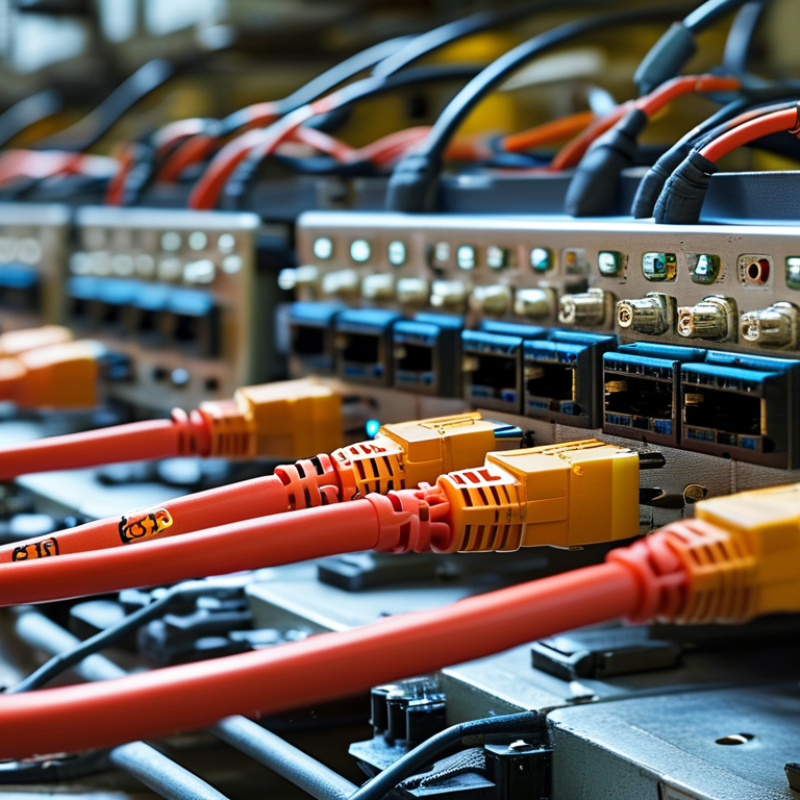
An RS422 to Ethernet converter is a communication gateway. It connects legacy RS422 equipment to a modern Ethernet network. The device receives differential serial signals, converts them into Ethernet packets, and sends them through TCP or UDP. The reverse process restores network data to RS422 signals.
RS422 is valued for noise resistance and stable transmission over long cable runs. TIA/EIA-422-B defines balanced signaling for industrial communication, with performance depending on cable quality, speed, and distance. In practical installations, a controller may sit 300 meters from a sensor cabinet. The converter can place that serial device on an existing network without replacing the original hardware.
The design is simple. Sometimes too simple.
A maintenance engineer still needs to configure baud rate, parity, stop bits, IP settings, and communication mode. Incorrect termination can create reflections and corrupted characters. According to MarketsandMarkets, the industrial Ethernet market is projected to grow strongly through 2028, driven by connected automation and remote monitoring. This trend explains the converter’s role: it extends the usefulness of proven serial equipment within networked factories.
However, conversion does not automatically improve data quality. Network congestion, cable faults, and unsuitable serial settings can introduce delays. Field experience shows that testing the complete path is essential, from the RS422 terminals to the software application. IEEE 802.3 Ethernet standards define network operation, but they do not guarantee every serial device will communicate correctly.
Why Choose an RS422 to Ethernet Converter?
How Does an RS422 to Ethernet Converter Work?
An RS422 to Ethernet converter links legacy serial equipment with modern IP networks. RS422 sends data through balanced differential signals, reducing noise across long cable runs. The converter receives these electrical signals, interprets the serial bytes, and places them inside Ethernet packets. Those packets then travel through switches, routers, or industrial gateways using TCP/IP or UDP. At the destination, the process reverses. Ethernet data becomes RS422 signals again.
The conversion is not simply a plug-and-play cable. Baud rate, data bits, parity, stop bits, and communication mode must match the connected device. Incorrect settings may produce partial readings, strange characters, or silent failures. The International Federation of Robotics reported 541,302 industrial robots installed globally in 2023. More connected machines increase the need to integrate older serial controllers with networked monitoring systems. Yet, I have seen projects overcomplicate this step. A basic test with a short cable often reveals more than a long specification sheet.
Tips: Check termination and grounding before blaming the converter. Keep serial cables away from high-power motors. Test both directions with real device commands, not only idle status messages. Record latency during busy periods, because a converter may appear reliable until network traffic rises. A 2024 industrial networking report from HMS Networks found that Ethernet-based technologies represented 71% of the surveyed industrial network market, while traditional fieldbuses remained significant. That contrast matters: replacement is not always practical, and careful conversion can extend useful equipment life.
Why Choose an RS422 to Ethernet Converter?
What Are the Main Benefits of Using One?
An RS422 to Ethernet converter connects reliable serial equipment with modern network infrastructure. It translates RS422 signals into Ethernet data without forcing technicians to replace working devices. In practice, this can link meters, controllers, sensors, and industrial instruments to a central monitoring computer.
The main benefit is distance. RS422 handles differential communication well, but Ethernet can carry data across existing networks and managed switches. A technician can inspect equipment from a control room instead of standing beside a cabinet. That matters. Remote access can reduce travel, shorten response times, and support faster fault checks.
Another benefit is centralized management. Several serial devices can share one secure network connection, depending on the converter’s ports and software settings. Network tools can record communication, identify interruptions, and simplify maintenance scheduling. Proper configuration still matters. Incorrect baud rates, parity settings, or cable termination can create confusing faults.
From field experience, converters also help protect older equipment investments. However, they are not magic. Network congestion, electrical noise, and poor grounding can still affect performance. A model with suitable isolation, industrial temperature support, and stable protocol handling is often more dependable. I would test the converter with real cable lengths and actual device traffic before full deployment. Lab results can look perfect, while a crowded control cabinet reveals weaknesses.
| Evaluation Dimension | Typical RS422-to-Ethernet Capability or Data | Main Benefit | Practical Application |
|---|---|---|---|
| Network Connectivity | Converts RS422 serial data into Ethernet packets for transmission over an IP network. | Allows legacy serial equipment to communicate with modern network infrastructure without replacing the equipment. | Connecting meters, controllers, instruments, and industrial devices to a local network. |
| Transmission Distance | RS422 cabling can reach approximately 1,200 m at lower data rates; the maximum distance decreases as baud rate and cable losses increase. Ethernet can extend farther through switches and routed networks. | Supports communication across large facilities and geographically separated network segments. | Factory floors, transportation systems, utility sites, and distributed monitoring installations. |
| Differential Signaling | RS422 uses balanced differential signaling, generally with one differential driver pair and one differential receiver pair. | Improves resistance to common-mode electrical noise compared with single-ended serial interfaces. | Reliable data transfer near motors, inverters, relays, and other sources of electromagnetic interference. |
| Data Rate Flexibility | RS422 can support data rates up to about 10 Mbps under suitable short-distance conditions; actual performance depends on cable quality, length, termination, and connected devices. | Accommodates both low-speed control messages and higher-speed serial data streams. | Configuring baud rates such as 9.6 kbps, 115.2 kbps, or higher when supported by the connected equipment. |
| Remote Access | Supports communication through TCP/IP networks; some models also support UDP or virtual serial-port operation. | Enables technicians and software applications to access serial devices from another room, building, or site. | Remote diagnostics, centralized monitoring, and maintenance of equipment installed in difficult-to-reach locations. |
| Installation Efficiency | Uses standard Ethernet cabling and network switches instead of requiring a dedicated long serial cable for every connection. | Reduces new cabling requirements and simplifies integration with an existing network. | Expanding an automation system without installing separate serial communication lines between every device. |
| Protocol Compatibility | Usually transports serial data transparently, allowing higher-level protocols such as Modbus RTU to operate over a suitable TCP connection. | Protects existing serial applications and reduces the need for major software changes. | Connecting legacy controllers to supervisory software, data-logging systems, or industrial gateways. |
| Scalability | Multiple converters can communicate through the same switched Ethernet infrastructure, subject to network capacity and system design. | Makes it easier to add devices and extend the system without redesigning the entire communication layer. | Gradually expanding production lines, test stations, or remote sensor networks. |
| Electrical Isolation | Industrial models may provide galvanic isolation on the serial interface, Ethernet interface, or power input; this feature must be verified for the selected unit. | Can reduce ground-loop problems and improve protection against electrical transients. | Interfacing equipment powered from different electrical panels or installed in electrically noisy environments. |
| Configuration and Management | Common configuration methods include a web interface, command-line tools, or serial setup; typical settings include IP address, TCP port, baud rate, parity, data bits, and stop bits. | Makes system commissioning and troubleshooting more manageable. | Adjusting communication parameters without physically replacing the connected serial equipment. |
| Real-Time Performance | The converter adds processing and network delay; latency depends on serial buffering, packet settings, Ethernet traffic, and the selected TCP or UDP mode. | Provides network access while allowing engineers to evaluate timing requirements before deployment. | Suitable for monitoring and control applications when the added network latency remains within the system's tolerance. |
| Maintenance and Troubleshooting | Network tools can help verify link status, IP reachability, connection state, and packet flow, while serial diagnostics verify baud rate and wiring. | Shortens fault-finding time compared with testing a long point-to-point serial cable alone. | Identifying whether a fault is caused by wiring, serial parameters, the converter, or the IP network. |
| Key Selection Considerations | Check RS422 connector wiring, supported baud rates, data format, TCP/UDP modes, isolation, power input, operating temperature, enclosure rating, and network security features. | Improves compatibility, reliability, and lifecycle performance. | Selecting a converter that matches the electrical, environmental, timing, and cybersecurity requirements of the installation. |
Why Choose an RS422 to Ethernet Converter?
Which Features Matter When Choosing a Converter?
An RS422-to-Ethernet converter connects long-distance serial equipment with modern network infrastructure. The right model should match your device’s communication settings. Check baud rates, data bits, parity, stop bits, and flow control. Protocol support matters too. Some converters handle transparent transmission, while others support TCP server, TCP client, or UDP modes. Do not assume compatibility.
Electrical protection deserves close attention. Look for galvanic isolation between the serial port, Ethernet port, and power input. Surge protection can reduce damage from industrial noise and unstable wiring. A metal enclosure, secure terminal blocks, and DIN-rail mounting help in control cabinets. Wide temperature tolerance is useful near motors, heaters, or outdoor equipment. Small details become important.
Network management features affect daily maintenance. Web configuration, static IP support, automatic recovery, and remote diagnostics can shorten service visits. Status LEDs should show power, link activity, and serial traffic clearly. Buffer capacity also matters when network traffic becomes irregular. Low latency is helpful, but stable delivery is usually more important than impressive speed.
I once selected a converter by interface compatibility alone. It worked on a bench, then lost data during busy network periods. That mistake changed my testing process. I now check packet behavior, cable length, grounding, and recovery after power loss. Documentation should explain these tests plainly. If it does not, reliability remains uncertain. A spare configuration file is useful, although I sometimes forget to update it.
Which features matter when choosing a converter? The chart compares common RS-422 and Ethernet reference points for planning cable distance, communication speed, and network integration.
RS-422 can reach approximately 1,200 m at 100 kbps under standard reference conditions, while higher serial speeds require shorter cable runs. Ethernet copper links commonly support up to 100 m per segment at 100 Mbps or 1 Gbps. When selecting a converter, also verify full-duplex support, protocol compatibility, electrical isolation, surge protection, configuration options, and the required Ethernet speed.
An RS422 to Ethernet converter is common where reliable serial equipment must join a modern IP network. RS422 uses balanced signaling, which resists electrical noise across long cable runs. That matters beside motors, drives, and switching cabinets. Yet the converter is not magic. Grounding, shielding, and surge protection still require careful engineering judgment.
Factories use these converters to connect CNC controllers, barcode readers, weighing systems, and programmable instruments. A technician can monitor a machine from a control room without replacing its older serial interface. World Robotics 2024 reported 541,302 industrial robots installed globally in 2023. This growing equipment base leaves many legacy devices operating beside newer Ethernet systems. The integration task is practical, not glamorous.
Utilities commonly place RS422 to Ethernet converters near remote meters, protection equipment, and data loggers. Transportation systems use them for platform displays, signaling cabinets, and vehicle diagnostics. Building automation also uses them for elevators, access panels, and environmental sensors. The 2024 Industrial Network Market report recorded Industrial Ethernet at 59% of newly installed industrial network nodes. That shift increases the need for protocol conversion. However, selecting a device only by connector type is risky. Engineers should check baud rate, isolation, IP addressing, latency, and operating temperature. A converter may pass data correctly on a workbench, then fail beside a high-voltage cabinet. Field testing remains necessary.

