What Are the Top Neodymium Magnet Types in 2026?
In 2026, choosing a Neodymium Magnet is not simply a search for the strongest option. The right type depends on its shape, manufacturing method, operating temperature, and installation requirements. Discs and blocks suit many compact assemblies, while rings and countersunk magnets can fit specific mounting designs. Arc segments are often used in motor assemblies, where their curved profiles follow a rotor or stator.
Manufacturing method matters, too. Sintered magnets generally deliver strong magnetic performance, while bonded versions can support more complex shapes and tighter design constraints. Neither is automatically better. A grade label, such as N35 or N52, indicates magnetic properties, but it does not tell the whole story. Temperature limits and corrosion resistance vary by grade and manufacturer. Coatings such as nickel, zinc, or epoxy can help protect a magnet, yet the best choice depends on its environment. Small details matter. A magnet near moisture, heat, or repeated impact may need different specifications than one inside a dry, cool enclosure. That sounds tidy, but real projects rarely stay tidy. Dimensions, tolerances, and holding force should be checked against the actual design, not just a product headline. This guide compares the leading neodymium magnet types expected to matter in 2026 and explains where each can fit. It also points out trade-offs, because a high-strength option can be unnecessary or difficult to handle. The practical choice is the one that performs reliably in its intended setting.
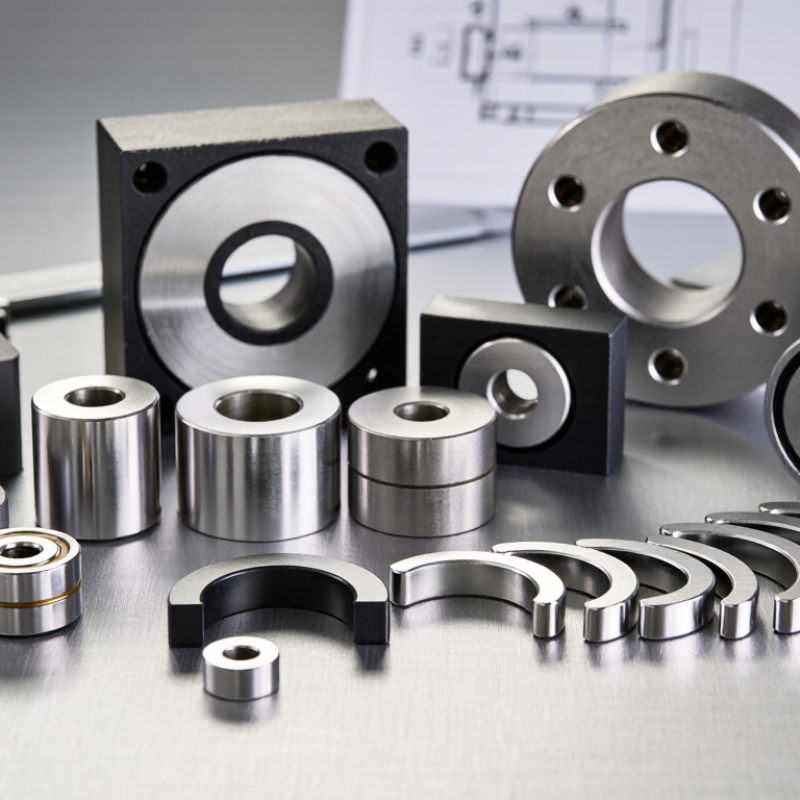
How Neodymium Magnet Types Are Classified in 2026
In 2026, neodymium magnet types are best classified by several features, not by one label. Shape is the easiest place to start. Discs and blocks suit flat mounting surfaces, while rings fit around shafts or fasteners. Arcs are commonly arranged into curved assemblies. Countersunk holes can simplify screw mounting, but they also reduce the material around the opening. Shape matters.
A second classification is magnetic grade, often shown as codes such as N35 or N52. The number indicates maximum energy product, not a guaranteed pull force in every setup. A small, high-grade disc may hold less than a larger, lower-grade block. Temperature capability also varies; some grades use suffixes to indicate improved resistance to heat or demagnetization. Check the datasheet, especially when the magnet will operate near a motor or warm enclosure.
Magnets are also distinguished by coating and magnetization direction. Nickel-based coatings are common, while epoxy coatings may be selected where added surface protection is needed. Magnetization may run through a disc’s thickness or across its diameter, changing how it must be positioned. These categories overlap. A ring magnet, for example, can have different grades, coatings, and pole patterns. The terminology is not always tidy, so compare dimensions, operating temperature, coating, and magnetic data rather than relying on a type name alone.
Sintered NdFeB Magnets: Grades, Shapes, and Strength
Sintered NdFeB magnets are commonly specified by grade, shape, and operating temperature—not by pull force alone. Standard grades such as N35 to N52 indicate approximate maximum energy products of 35 to 52 MGOe; higher numbers generally mean greater magnetic output for the same volume. They do not guarantee a specific lifting force. That depends on dimensions, air gap, steel thickness, and the test setup.
Small details matter.
Suffixes such as H, SH, and UH generally indicate improved resistance to heat-related demagnetization, though exact limits vary by specification. Discs and blocks suit many compact assemblies; rings and arc segments fit rotating designs.
Sintered material is hard and brittle, so sharp edges can chip during handling. Protective coatings also matter in humid or corrosive settings.
The USGS Mineral Commodity Summaries 2025 estimates global rare-earth mine production at 390,000 metric tons of rare-earth-oxide equivalent in 2024, including 270,000 tons in China. This is upstream supply context, not a measure of magnet output. A practical specification should name grade, dimensions, coating, temperature, and test conditions. Even then, field performance may surprise you.
Bonded NdFeB Magnets: Flexible Designs and Uses
Bonded NdFeB magnets combine neodymium-iron-boron powder with a polymer binder, then take shape through molding or extrusion. This process makes rings, arcs, thin segments, and custom shapes that are difficult to produce as one-piece sintered magnets. Useful in compact motors. They also appear in sensors and miniature actuators. Because binder takes up part of the material, bonded grades generally provide less magnetic strength than comparable sintered grades. Yet a precise shape can matter more than peak pull in a cramped assembly. Small details count.
Injection molding supports repeatable, intricate shapes; compression molding can allow higher magnetic loading, with different design trade-offs. Neither route is automatically best. Check operating temperature, magnetic direction, tolerances, and exposure to oil or moisture against technical data for the specific grade. Binder and grade affect these limits, so a coated surface alone is not a complete corrosion guarantee. Prototype parts under real heat and vibration. It is tempting to skip that step, but testing can reveal weak points before a design is finalized. Shape flexibility does not guarantee performance flexibility.
High-Temperature Neodymium Magnets for Demanding Conditions
High-temperature neodymium magnets suit motors, pumps, and sensors where heat can weaken magnetic output. Standard NdFeB grades often have maximum operating temperatures near 80°C; specialized grades can reach roughly 150–200°C, depending on composition and magnetic circuit design. These are not guaranteed limits. Heat changes everything. A rotor near a hot bearing may experience a different temperature from the housing sensor’s reading.
Temperature coefficients help explain the risk. Representative NdFeB engineering data show remanence dropping by about 0.1% per °C, while coercivity can decline around 0.5% per °C. The exact values vary by grade. As coercivity falls, a magnet becomes more vulnerable to irreversible demagnetization under heat and opposing fields. The U.S. Department of Energy’s 2022 Rare Earth Permanent Magnets supply-chain assessment projects clean-energy demand for NdFeB magnets could grow roughly three- to sevenfold by 2040. That growth makes careful grade selection and thermal testing increasingly important, not optional.
Tips: Check the magnet’s actual peak temperature, not just ambient conditions. Allow for short heat spikes, nearby coils, and airflow changes. Specify intrinsic coercivity alongside maximum operating temperature. I would still test a prototype under its real load; catalog limits cannot capture every installation. Small details matter.
Top High-Temperature Neodymium Magnet Types in 2026
Typical maximum operating temperatures by NdFeB grade category
Higher-temperature grades generally offer greater resistance to irreversible demagnetization. Values shown are typical grade-category limits; actual performance depends on magnet shape, magnetic circuit, and specific material specifications.
Protective Coatings and Choosing the Right Magnet Type
What Are the Top Neodymium Magnet Types in 2026?
Sintered NdFeB magnets offer high magnetic strength, but their exposed surfaces can corrode in humid conditions. Bonded magnets suit more complex shapes, while coating needs depend on the part’s construction and use. Nickel-copper-nickel coatings are common for indoor components. Epoxy can be a better candidate for damp environments, but chipped edges may expose the magnet beneath. No coating makes every magnet suitable for constant saltwater exposure.
The USGS Mineral Commodity Summaries 2025 estimates 2024 rare-earth mine production at 390,000 metric tons worldwide, including 270,000 metric tons from China. These figures describe rare-earth supply, not magnet output or coating performance. For procurement, ask for test results on the finished magnet, since substrate preparation and edge coverage affect corrosion resistance. Small details matter. A salt-spray result alone may not predict service life in your exact environment.
Tips: Match the coating to moisture, chemicals, temperature, and handling. Check whether the magnet will be assembled or cut after coating; machining can expose bare material. Request the test method, duration, and failure criteria. Then verify fit and coating condition on sample parts. One caveat: specifications can look precise, yet real use may still surprise you.