

GRP Storage Tank manufacturers in China serve industries that need dependable water, chemical, and process-fluid storage. Their products are built from glass-fibre-reinforced plastic, a material valued for corrosion resistance and relatively low weight. Yet performance depends on more than the material. Resin selection, laminate thickness, joint design, and installation quality all matter.
The United Nations World Water Development Report 2024 estimates that 2.2 billion people lacked safely managed drinking water in 2022. This figure does not measure demand for GRP tanks directly, but it highlights the continuing need for robust water infrastructure. For buyers, the detail is practical: a tank must suit its liquid, site conditions, capacity, and maintenance plan. A neat catalogue specification is not enough.
Standards offer a useful starting point. ASTM D3299 covers filament-wound fiberglass-reinforced polyester tanks, while project requirements may call for other materials, designs, or verification. This guide compares Chinese manufacturers through product range, documented quality controls, engineering support, and export experience. One limitation deserves attention: a named expert quotation should not be invented or presented without a verifiable source. The selection process should be equally careful. A low price can look attractive; a poorly matched tank can cost more later.
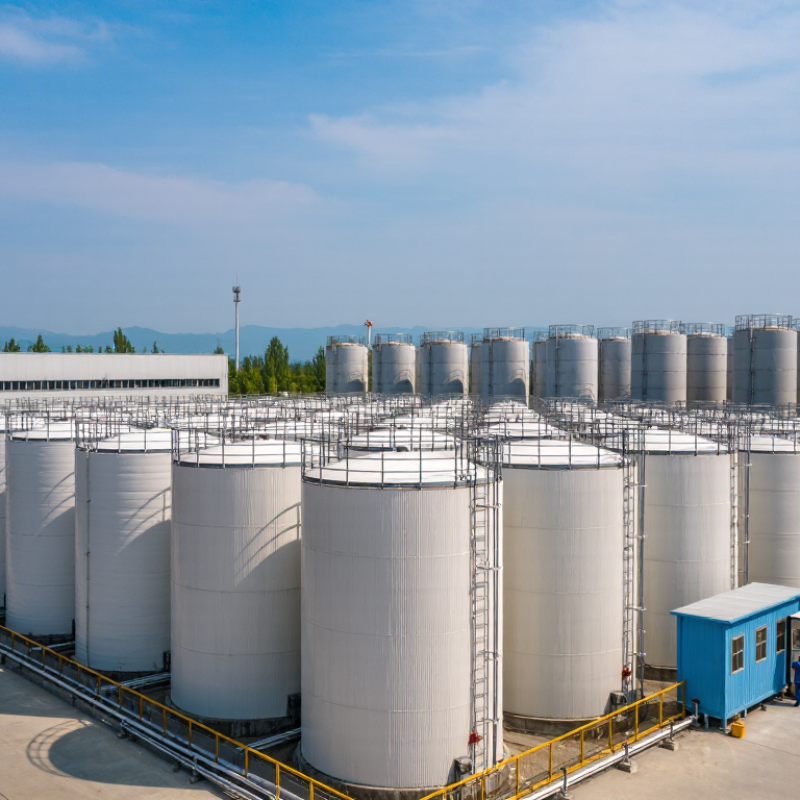
Top GRP Storage Tank Manufacturers in China
GRP Storage Tanks: Glass-Fiber Reinforcement, Resin Matrix, and Core Uses
A GRP tank is a layered structure, not simply a plastic container. Glass fibers provide reinforcement and help the shell resist loads. The resin matrix binds those fibers, transfers stress, and forms a barrier against the stored liquid. The balance matters. Too little attention to laminate design can create weak points around nozzles, joints, or supports.
Resin selection should match the liquid, operating temperature, and cleaning routine. A tank holding cool irrigation water faces different demands from one exposed to warm process water. Confirm chemical compatibility and review the design limits before specifying a unit. Details count: inspect the inner surface, fittings, access cover, and foundation level. A small uneven area beneath the base can affect how loads are distributed.
GRP tanks commonly serve water storage, agricultural irrigation, industrial process supply, and fire-water reserves. Potable-water use requires suitable material documentation and a hygienic interior finish. Installation quality matters, too. Even a well-made tank can disappoint if piping loads strain its connections. Specifications are not perfect predictors; actual site conditions deserve a careful check.
Representative densities of common reinforcement and resin materials, in g/cm³.
E-glass reinforcement is denser than the resin matrices shown. In a GRP tank, glass fibers provide reinforcement while the resin binds the fibers and helps provide chemical resistance. Actual material densities vary by formulation; tank suitability depends on the stored medium, temperature, and design. Common uses include water storage, wastewater treatment, and chemical storage.
China’s GRP tank manufacturers differ in production capacity, construction method, and quality documentation. Capacity figures need context: ask whether a supplier reports annual output, maximum single-tank volume, or modular assembly capacity. These are not interchangeable. The WHO/UNICEF Joint Monitoring Programme reported that 2.2 billion people lacked safely managed drinking water in 2022, underscoring the need for dependable storage. It does not measure tank demand, but it highlights why water-contact materials and traceable quality checks matter.
Compare resin and reinforcement choices against the stored liquid, temperature, and site conditions. Ask for resin specifications, laminate details, and test records—not just a product brochure. For construction, ASTM D3299 covers filament-wound FRP tanks, while ASTM D4097 covers contact-molded tanks. Potable-water projects should verify relevant NSF/ANSI/CAN 61 certification for the supplied product or components. Confirm the certificate’s scope and validity directly. A large catalog is not proof of large-scale quality.
Tips: Request drawings showing nominal and usable capacity, plus panel dimensions and installation tolerances. Check recent production records and inspection procedures. A polished certificate can still leave gaps; I would verify the exact tank configuration before comparing bids.
ASTM D3299 covers filament-wound, corrosion-resistant FRP tanks; ASTM D4097 covers contact-molded tanks. The methods create different laminate structures. In filament winding, resin-wetted glass fibers are placed in controlled paths around a rotating mandrel. This helps build consistent hoop strength in cylindrical shells. Contact molding lays reinforcement into a mold, often by hand, giving fabricators more freedom with shapes and local details. It also demands careful control of resin content and worker technique.
The distinction matters in service. A winding pattern can be tailored to tank diameter, liquid head, and design loads, but fittings and unusual geometry need close attention. Contact molding can suit complex shapes, though thickness and fiber placement may vary if process checks are weak. Neither method wins every job. Real projects are messier than a standards comparison.
The AMPP/NACE IMPACT study estimated corrosion costs at US$2.5 trillion annually, or 3.4% of global GDP, and reported potential savings of 15–35% through corrosion-control practices. That figure is not a tank-specific forecast, but it underlines the value of sound material selection and inspection. When evaluating manufacturers in China, buyers should review laminate schedules, resin compatibility data, cure records, and inspection procedures—not just the process name. A neat winding pattern is not proof of a durable tank.
Top GRP Storage Tank Manufacturers in China
For Chinese GRP tank manufacturers, chemical compatibility is a design requirement, not a catalogue checkbox. Cefic’s 2024 Facts & Figures reports that China accounted for about 44% of global chemical sales in 2023. This scale makes dependable storage design especially important. EN 13121-2 addresses materials, while EN 13121-3 covers design and workmanship for above-ground GRP tanks and vessels. Buyers should request traceable design calculations, laminate schedules, and documented resin selection.
Chemical resistance depends on the stored medium, its concentration, temperature, and exposure time. A resin chart alone is not enough. ASTM C581 provides a method for evaluating chemical resistance in fiberglass-reinforced structures. Ask whether representative test coupons were exposed to the actual chemical and operating temperature. Check the corrosion barrier, joints, and inspection access too. A well-selected resin can still fail if fabrication quality or operating conditions differ from the design assumptions.
Tips: Provide the supplier with the chemical’s full composition, maximum temperature, and cleaning routine. Request test records and inspection criteria. Small details matter. I would still question any claim of “universal resistance”; real service conditions are rarely that tidy.
| Evaluation dimension | Relevant benchmark | What a compliant design or supplier should demonstrate | Evidence to request |
|---|---|---|---|
| Applicable standard | EN 13121 addresses glass-reinforced plastics (GRP) tanks and vessels for use above ground. Its parts cover general requirements, materials and chemical resistance, design and workmanship, and delivery, installation and maintenance. | The design basis identifies the applicable parts and editions, tank service conditions, and any relevant local regulatory requirements. | Design-basis document, standard edition list and project-specific compliance statement. |
| Structural design | EN 13121-3 provides design and workmanship requirements for above-ground GRP tanks and vessels. | Calculations account for the specified geometry, liquid density, operating conditions, support arrangement and applicable loads. Design assumptions should be documented rather than treated as universal values. | Signed design calculations, drawings, load assumptions and support or foundation details. |
| Chemical compatibility | EN 13121-2 covers composite materials and chemical resistance for GRP tanks and vessels. | Compatibility is assessed for the actual chemical, concentration, temperature, exposure conditions and cleaning regime. A generic statement that a tank is “chemical resistant” is not sufficient for every service. | Written compatibility assessment identifying the liquid, concentration, temperature range, resin system and any operating limitations. |
| Corrosion barrier and laminate | Material selection and construction should be consistent with the intended chemical service and the applicable EN 13121 design requirements. | The corrosion-resistant inner surface and structural laminate are specified separately where applicable, with materials and construction matched to the service conditions. | Laminate schedule, resin and reinforcement specifications, and manufacturing records for the corrosion barrier. |
| Operating limits | Permitted service conditions depend on the tank design, materials and project specification; they should be established for each application. | Maximum and minimum operating temperatures, liquid density, fill level, pressure or vacuum conditions, and any restrictions are clearly stated. | Tank data sheet, nameplate information and operating and maintenance instructions. |
| Openings and connections | Nozzles, manways, supports and attachments need to be included in the design and detailed for the specified service. | Connection locations and loads are coordinated with piping and installation requirements to avoid unassessed local stresses. | Approved general arrangement and nozzle schedule, including connection sizes, orientations and design conditions. |
| Manufacturing quality | Workmanship and production controls should support the documented design and material specifications. | The manufacturer maintains traceable production records and defined inspection steps for materials, laminate construction, joints and finished dimensions. | Inspection and test plan, material certificates where applicable, production records and non-conformance procedure. |
| Inspection and testing | Inspection and acceptance criteria should be defined by the applicable standard, design documentation and purchase specification. | Tests are selected for the tank design and service; test methods, acceptance criteria and results are recorded. No single test should be assumed to verify every aspect of chemical suitability or structural performance. | Inspection reports, applicable test procedures and final acceptance records. |
| Delivery and installation | EN 13121-4 covers delivery, installation and maintenance for above-ground GRP tanks and vessels. | Handling, lifting, storage, foundation preparation, installation and inspection instructions are provided for the supplied tank. | Installation manual, lifting instructions, foundation requirements and commissioning checklist. |
| Safety documentation | Safe operation depends on the tank design, stored substance, site conditions and applicable regulations. | Documentation identifies service limits, inspection needs, maintenance measures and relevant hazards; site-specific process and workplace safety requirements are addressed by the responsible operator. | Operation and maintenance manual, inspection schedule, hazard information and emergency-response interfaces. |
Note: This table summarizes general evaluation benchmarks and does not certify or rank any manufacturer. Confirm the applicable EN 13121 editions and project requirements for each procurement.
A supplier’s brochure is not a test record. Ask for laminate thickness readings, resin batch traceability, cure checks, and documented leak-test results. For filament-wound tanks, compare the proposed design with ASTM D3299 and request evidence that production checks match the project specification. Numbers matter. NACE International’s 2016 IMPACT study estimated annual corrosion costs at US$2.5 trillion, about 3.4% of global GDP. It estimated potential savings of 15–35% through improved corrosion management. This is useful context, not proof that any tank will perform well. I would still check how the supplier handles defects and test failures.
Installation quality can undermine a sound tank. Ask who checks foundation level, anchor positions, lifting points, and nozzle alignment before the tank arrives. Request a clear filling and commissioning procedure, plus signed inspection records and photographs. After-sales support should specify response times, inspection intervals, spare-part availability, and warranty exclusions in writing. Ask for a sample service report, not just a promise of “lifetime support.” A precise answer is reassuring. A hesitant answer is not always disqualifying, but it deserves follow-up. Check whether the supplier can explain what is covered, who pays for site visits, and how repairs are documented.

