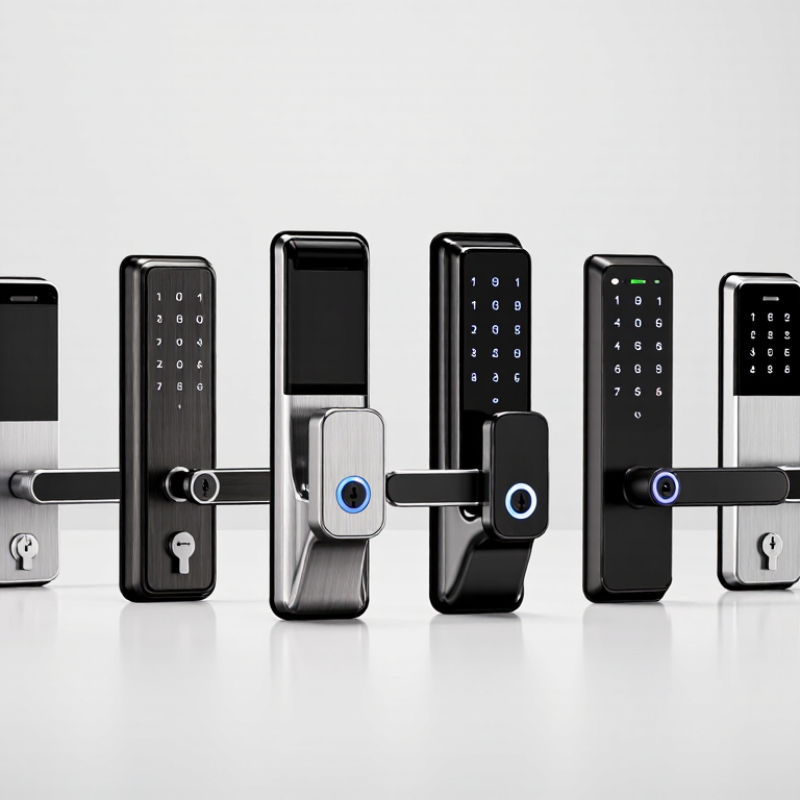
Top 10 Fingerprint Smart Locks for Global Buyers

Choosing a Fingerprint smart lock means weighing more than scan speed. Buyers also need dependable access, sensible privacy controls, and a design suited to the door. A lock that works smoothly in a showroom may behave differently after months of dust, rain, or heavy daily use. Small details matter: a clear fingerprint sensor, readable keypad, and battery warning that arrives before the door goes quiet.

Cybersecurity expert Bruce Schneier has said, “Security is a process, not a product.” That reminder applies to connected locks, too. A fingerprint reader is convenient, but it should sit within a wider plan that may include a PIN, mechanical key, or temporary access code. No single feature answers every buyer’s needs. Some trade-offs are easy to miss.

This guide introduces ten fingerprint smart locks for global buyers, with attention to access methods, installation, connectivity, power backup, and practical use. It also considers how climate, door type, and local availability can affect a purchase. Specifications can change by region, so verify the model and support options before ordering. A polished feature list is not proof of long-term reliability. That deserves a closer look. The right choice depends on who uses the door, how often, and what happens when the battery runs low.

Top 10 Fingerprint Smart Locks for Global Buyers

How Fingerprint Smart Locks Identify and Verify Users

A fingerprint smart lock compares features in a scan, rather than identifying someone by name. During setup, the sensor reads ridge patterns and converts selected details into a digital template. Many systems store this template instead of a full fingerprint image, though storage methods vary by model. The lock compares a new scan with enrolled templates and grants access when the match meets its acceptance threshold. Small details matter: a dusty sensor, dry skin, or a shallow cut can change the reading. That matters. Finger placement and pressure can affect results, too.

A useful check is to test the lock with the same finger from different angles and in ordinary conditions, such as after washing your hands. Some sensors use capacitive sensing; others use optical or ultrasonic methods, each with different trade-offs. A permissive threshold may reduce failed attempts but could increase the chance of accepting a close, unintended match. A stricter setting can reject legitimate users. Not every scan works. Buyers should ask how templates are protected, whether access records can be reviewed, and how software updates are provided. Keep an appropriate backup entry method available, but do not treat it as an afterthought. Specifications alone are imperfect evidence; independent testing and clear explanations of enrollment and deletion procedures offer more useful context.

What to Compare When Choosing a Fingerprint Smart Lock

When comparing fingerprint smart locks, start with the door, not the app. Measure the door thickness, backset, and existing lock body; doors vary worldwide, and a compatible-looking keypad may still require costly changes. Check whether the lock suits your door’s handing and exposure to weather. Then compare fingerprint performance under ordinary conditions. Ask how it handles damp fingers, worn prints, or a child’s smaller finger. Test it in person. A fast laboratory figure is less useful than steady access on a cold morning. Check enrollment capacity, too, especially for households with guests or rotating staff.

Look beyond unlock speed. Compare backup options, such as a PIN or mechanical key, and confirm whether they work during a flat battery or network outage. Check the battery type, low-power alerts, and emergency charging method; these details matter when the door is shut. Review app permissions, biometric data handling, update support, and whether remote features require a hub or subscription. For shared buildings, check whether temporary codes can be time-limited and removed easily. Independent durability and security testing can build confidence, but methods differ, so read what was assessed. I would not choose by feature count alone. More options can mean more settings to maintain, a trade-off that is easy to underestimate.

Essential Security, Access, and Connectivity Features

Fingerprint smart locks can make daily entry quicker, especially when keys are easy to misplace. For global buyers, security should come before a long feature list. Look for encrypted communication, tamper alerts, and a sturdy deadbolt that fits the door. A fingerprint reader should recognize enrolled users consistently, but no sensor works perfectly every time. Wet fingers can be frustrating. Keep a key, PIN, or other backup method available.

Access options matter when family, guests, or service workers need different levels of entry. Individual user profiles make it easier to remove access later without changing everyone’s credentials. Temporary PINs can help with short visits, while activity logs show when the door was used. Check whether logs are stored locally or in an account, and review the privacy settings. Small details count.

Connectivity can add remote alerts and app-based control, but it also depends on the home network. Confirm whether the lock uses Wi-Fi, Bluetooth, or a separate hub, and check what happens during an outage. Battery warnings should arrive early enough to prevent a lockout; physical access to emergency power can be useful. Door thickness, backset, and installation direction vary, so measure before ordering. Compatibility deserves a second look. For international purchases, verify the seller’s stated certifications against requirements in your own market.

Top 10 Fingerprint Smart Locks for Global Buyers — Essential Security, Access, and Connectivity Features

PIN-code combinations by code length: a mathematical security reference for evaluating backup access options.

Counts assume each PIN can use digits 0–9, including leading zeros. Actual smart-lock PIN length rules and security protections vary by model; longer PINs do not prevent risks such as guessed or reused codes.

Top 10 Fingerprint Smart Locks for Global Buyers

Global buyers comparing the top ten fingerprint smart locks should start with the door, not the app. Measure door thickness, backset, and handle clearance before ordering. A compact fingerprint reader can still fail on wet, dusty, or worn fingers. Keep a key, keypad, or other backup entry method available. Small details matter.

Market growth shows why this category deserves careful comparison. Grand View Research’s Smart Lock Market report estimated the global market at USD 2.81 billion in 2023 and projected a 17.4% compound annual growth rate from 2024 to 2030. This covers smart locks broadly, not fingerprint models alone. Still, it signals rising demand and a crowded field. More choice is not automatically better.

For international purchases, check whether the lock supports the buyer’s local voltage, network frequency, app region, and preferred smart-home connection. Ask how many fingerprints it stores and whether enrollment can be deleted after a tenant moves out. Check the stated battery life, low-battery warning, and mechanical override. Then read independent test details, not just “fast recognition” claims. Recognition can vary with finger condition and installation. I would also test the sensor at the actual door before relying on it daily; that step is easy to overlook.

Regional Compatibility, Installation, and Maintenance Considerations

Regional compatibility starts at the door, not the app. Measure the backset, door thickness, and spacing between the handle and deadbolt before comparing locks. A keypad may fit one door but collide with a narrow trim plate on another. Check whether the lock supports local Wi-Fi frequencies, Bluetooth, and the smart-home protocol already used in the home. Bluetooth SIG’s 2024 Market Update projects annual Bluetooth device shipments rising from 5.4 billion in 2023 to 7.5 billion by 2028. That growth signals a broad device ecosystem, not guaranteed interoperability. Grand View Research valued the global smart-lock market at 2.91 billion US dollars in 2023 and forecasts 19.4% annual growth through 2030. Still, market growth says little about whether a specific lock suits a local door.

Installation quality matters. A misaligned bolt can drain batteries as the motor strains against the frame. Use the supplied template, test the deadbolt by hand, then check operation with the door both open and closed. Small details matter. For maintenance, set low-battery alerts, keep a physical backup key where appropriate, and inspect the latch after seasonal door movement. Check firmware update support and whether basic entry still works during an internet outage. Product specifications can be incomplete; confirm measurements and regional support with the seller before ordering. A little uncertainty remains, especially with older doors.

Top 10 Fingerprint Smart Locks for Global Buyers - Regional Compatibility, Installation, and Maintenance Considerations

The entries below describe common lock configurations, not specific branded products or a verified product ranking. Door preparation, supported wireless features, fingerprint capacity, and environmental ratings vary by model; confirm the manufacturer’s current specifications before purchase.

No. Lock Configuration Typical Regional Fit Compatibility Checks Installation Considerations Access and Connectivity Power and Maintenance
1 Fingerprint retrofit deadbolt Commonly suited to North American single-cylinder deadbolt doors. Check the existing deadbolt, door thickness, backset, bore, and interior clearance. Common backsets are 2⅜ in (60 mm) and 2¾ in (70 mm); many doors use a 2⅛ in (54 mm) cross-bore, but measurements must be verified. Typically replaces the interior thumb-turn while retaining the exterior cylinder. Confirm that the existing bolt moves freely and that the interior mounting area is unobstructed. Fingerprint access is often paired with a physical key or keypad. App control, Wi-Fi, or other wireless functions depend on the particular model and any required hub. Usually battery-powered. Check the low-battery alert method, emergency power or key provisions, and whether the lock requires a particular battery type.
2 Full-replacement deadbolt with fingerprint reader Often designed for North American deadbolt preparations; some models support additional door dimensions. Verify bore diameter, edge-bore size, backset, door thickness, handing, and the included latch dimensions. Existing holes do not guarantee a compatible fit. Replaces both interior and exterior deadbolt hardware. Installation may require adjustment or redrilling if the door preparation differs from the template. May offer fingerprints, PIN codes, keys, and app access. Remote access typically requires a compatible network connection or hub. Inspect batteries periodically and keep the bolt, strike, and door alignment free of binding. A misaligned door can increase motor load and shorten battery life.
3 Fingerprint lock for a European profile-cylinder door Potential fit for doors using a Euro-profile cylinder, common in many European markets. Measure cylinder length on both sides, door thickness, cylinder projection, and the location of any security escutcheon. Confirm whether the lock works with the installed cylinder and emergency-function requirements. Some designs replace the cylinder; others attach to the inside of an existing cylinder. Check clearance around the handle, key, and door frame before fitting. Fingerprint and PIN options may be available. Wireless protocols and app availability can vary by country, product version, and regional radio regulations. Check battery status in the app or at the lock, if supported. Keep the cylinder and lock mechanism clean; use only maintenance products permitted for the installed cylinder.
4 Fingerprint multipoint-lock replacement Relevant to many UK and other European doors with multipoint locking systems. Record the existing lock case dimensions, backset, PZ measurement, faceplate, spindle arrangement, and multipoint hardware type. These measurements are system-specific. May require a compatible multipoint gearbox or complete strip. Professional assessment is advisable when the door has complex or proprietary hardware. Fingerprint access may operate a compatible motorised mechanism; some systems still require the handle to be lifted to engage all locking points. Test the door with it open before relying on electronic operation. Keep locking points aligned and follow the hardware maker’s lubrication and inspection guidance.
5 Fingerprint mortise lock Used in a range of regions, including doors prepared for mortise lock cases. Match the case dimensions, backset, faceplate, spindle, handing, and latch or deadbolt arrangement. “Mortise lock” does not describe one universal size. Usually requires a correctly sized pocket in the door edge. Replacing an existing mortise case is generally easier than converting a door prepared for another lock type. Depending on the design, credentials can include fingerprints, PINs, cards, or a mechanical key. Confirm how the interior handle and emergency egress operate. Check batteries and test the latch and deadbolt regularly. Avoid forcing the handle if the door is sagging or the locking points are misaligned.
6 Fingerprint rim lock or night-latch replacement May suit doors using a surface-mounted rim lock, including some UK-style installations. Check the rim-lock case position, keep dimensions, door handing, cylinder arrangement, and whether the existing latch is compatible with the electronic unit. Often mounts on the inside face of the door, but the exterior access component and existing cylinder arrangement vary. Confirm that the door closes and latches without excessive force. May combine fingerprint access with a keypad, key, or remote credential management. Confirm what happens during a power failure. Inspect the latch, keep, and mounting screws. Battery replacement should not require leaving the door unsecured; follow the model’s documented procedure.
7 Fingerprint lever-handle lock Commonly available for interior or entry doors prepared for a compatible tubular latch or lockset. Verify bore and latch dimensions, door thickness, handing, and whether the model is intended for an exterior entrance. A lever lock may not provide deadbolt-level security. Can be suitable for a prepared lockset opening. Check lever clearance, latch alignment, and accessibility needs, including lever operation and egress requirements. May provide fingerprints, PINs, and mechanical key access. Confirm whether automatic locking is configurable and whether local rules permit the intended use. Clean the reader with a soft, dry cloth. Test stored fingerprints after changes to users’ fingers or seasonal skin conditions, and keep a backup credential available.
8 Fingerprint lock with keypad and card access Useful where households, rentals, or small workplaces need multiple credential types; door fit depends on the underlying lock format. First identify whether the lock is a deadbolt, mortise, lever, or cylinder-mounted design, then check that format’s dimensions and door requirements. Installation varies by lock body. Before fitting, confirm user capacity, credential deletion controls, and whether temporary PINs can be managed without an internet connection. Fingerprint, PIN, and card support can reduce reliance on a single access method. Card frequency and compatibility are model-specific; cards are not universally interchangeable. Periodically remove credentials for former users and review access records if available. Protect PIN entry from casual observation and replace batteries when prompted.
9 Weather-resistant fingerprint lock for an exterior gate or outbuilding Potentially suitable for sheltered outdoor locations when the specific unit is rated for the exposure. Check the stated operating temperature, water and dust protection rating, corrosion resistance, gate thickness, and latch geometry. An indoor lock should not be assumed suitable outdoors. Ensure the gate remains aligned as it moves and that the lock is mounted to a stable surface. Protect wiring and batteries from water ingress where applicable. Fingerprint access may be standalone or connected. Confirm that the wireless signal reaches the gate and that remote unlocking is appropriate for the security setting. Clean and inspect the reader, seals, fasteners, and latch more frequently in exposed locations. Follow the product guidance for cold-weather operation and battery replacement.
10 Offline fingerprint smart lock for shared or low-connectivity sites Can be considered in locations with unreliable internet, provided the lock supports local credential management and fits the door. Check door and lock dimensions, fingerprint storage limits, credential administration method, and whether audit data can be retrieved locally. Installation follows the selected lock format. Establish who can enroll or delete users, and test the emergency access method before regular use. Fingerprint matching may occur locally, without continuous internet access. App synchronisation, remote administration, and event logs may be limited or unavailable offline. Maintain a documented battery-change schedule and test backup access. Review user permissions periodically, especially after staff or tenant changes.

Article Source: