

Top 10 Electric Moped Scooter Manufacturers in China

China’s electric two-wheeler sector includes established brands, specialist factories, and newer companies competing on price, design, and production scale. For buyers comparing the Top 10 Electric Moped Scooter Manufacturers in China, a polished product photo is only a starting point. The details matter.

A useful comparison looks beyond advertised speed or battery capacity. Check motor output, battery chemistry, stated range, charging time, braking components, frame construction, and warranty terms. Ask whether figures come from standardized tests or ideal riding conditions. A large range claim can shrink on steep streets, in cold weather, or with a heavier rider. Real use differs.

This guide introduces manufacturers and the practical questions worth asking before choosing a supplier. It considers product variety, manufacturing experience, quality-control practices, customization options, and after-sales support, while distinguishing a brand owner from a factory or trading company where information allows. A clear service process matters when a controller, display, or battery needs attention months later. Request current specifications and written answers; do not rely on a showroom conversation alone. Company capabilities can change, and public information may be incomplete. That deserves caution.

The right Electric Moped Scooter depends on its intended route, load, budget, and access to maintenance. A short urban commute calls for different priorities than frequent hill climbs. No ranking can replace product checks or a direct supplier discussion, but careful comparison can help narrow the field. Look closely. Judge the evidence.
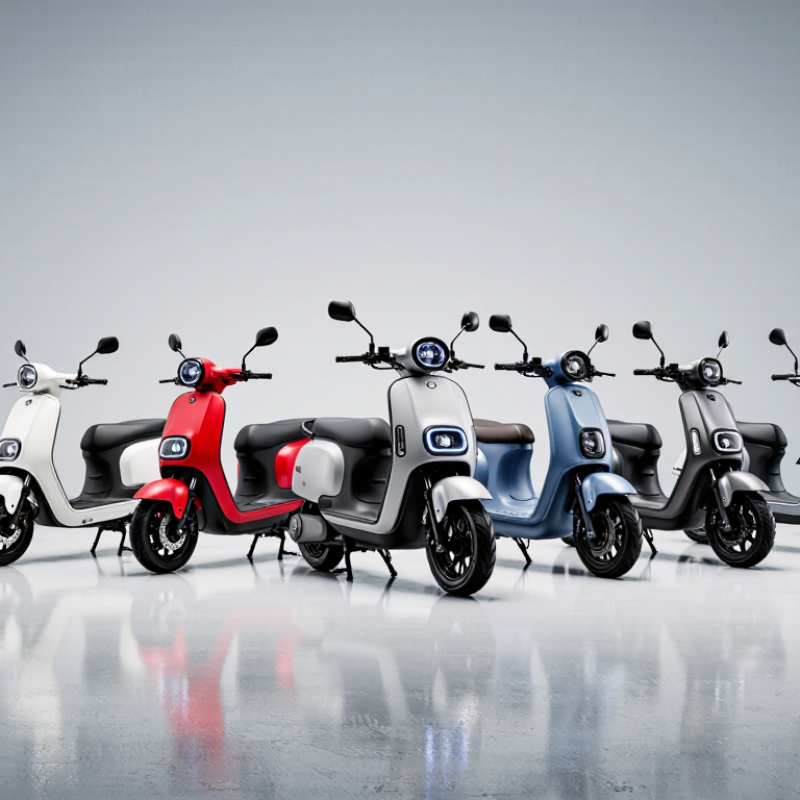
Top 10 Electric Moped Scooter Manufacturers in China

Criteria for Identifying Leading Electric Moped Scooter Manufacturers in China

Choosing a leading electric moped scooter manufacturer takes more than comparing prices. The IEA’s Global EV Outlook 2024 estimates that China held about four-fifths of the global electric two- and three-wheeler fleet in 2023. Scale can support mature supplier networks, but it does not prove consistent quality. Request model-specific test records, warranty-claim rates, and audited production figures.

The China Bicycle Association reported national electric-bicycle output of roughly 42 million units in 2023. That category is not identical to electric moped scooters, so the figure should not be treated as a scooter ranking. It does show why buyers should check what a factory’s capacity numbers actually include. Ask how each model is tested for range under load, braking, water resistance, and battery cycle life. Look at the conditions, not just the headline result.

Factory visits can reveal practical details: battery traceability labels, inspection stations, and spare-part storage. Check whether the manufacturer can provide clear service procedures and parts support for export markets. A polished showroom helps little. I’d also compare sample units from different production batches; one sample can flatter a factory. Some evidence may still be incomplete, so record unanswered questions rather than assuming a claim is verified.

Top 10 Electric Moped Scooter Manufacturers in China: Key Evaluation Criteria

Regulatory reference points for assessing electric two-wheeler manufacturers in China

These figures are maximum limits specified by China’s GB 17761-2018 standard for electric bicycles: 25 km/h design speed, 400 W rated continuous motor power, 48 V battery nominal voltage, and 55 kg vehicle mass. They provide regulatory context for evaluating product compliance, not a ranking of manufacturers. The standard applies to electric bicycles; electric mopeds may be subject to different requirements. The values use different units and should not be compared by bar height.

Source: GB 17761-2018, Safety Technical Specification for Electric Bicycles.

Profiles of Ten Major Chinese Electric Moped Scooter Manufacturers

China’s electric moped scooter sector serves crowded city streets, rural roads, and export markets. The International Energy Agency’s Global EV Outlook 2024 identifies China as the world’s largest electric two- and three-wheeler market. Scale matters, but it does not tell the whole story. Range claims, battery quality, and repair access deserve equal attention.

These ten profiles highlight different manufacturing strengths. One focuses on high-volume commuter scooters; another develops higher-powered models. A third specializes in compact frames for narrow streets. A fourth emphasizes utility designs for carrying loads. Others concentrate on battery systems, connected dashboards, lightweight construction, contract manufacturing, export-ready configurations, or regional service networks. Look for practical details: battery removal time, brake feel, frame welds, and parts availability. They show more than polished product photos.

China Bicycle Association reporting places annual electric bicycle production in the tens of millions, reflecting the sector’s manufacturing depth. Yet production totals do not prove durability. That distinction matters. Buyers and distributors should compare warranty terms, testing disclosures, and replacement-part lead times. Some specifications remain difficult to verify across suppliers; this is an industry weakness, not a minor footnote. A scooter can look sturdy in a showroom and still disappoint after months of daily use.

Comparison of Product Types, Technologies, and Target Markets

China’s electric moped scooter manufacturers serve several distinct needs, so product type is a useful starting point. Compact seated scooters often suit short urban commutes, while models with larger batteries target longer daily routes. Some makers also offer utility-focused designs with reinforced racks and wider footboards. Small details matter: a delivery rider may value a stable rear rack more than a sleek display.

Technology choices differ, too. Many manufacturers use lithium-ion battery packs for lower weight and easier handling, while some entry-level products prioritize lower purchase cost. Motor power, battery capacity, braking systems, and charging time should be compared together. A higher capacity does not automatically mean better range; rider weight, hills, tire pressure, and temperature all affect real-world results. Test conditions are not always clear. That deserves attention.

Target markets shape these trade-offs. Export-oriented makers may emphasize removable batteries, simple controls, and parts availability, while domestic-focused ranges can include varied frame sizes and price points. Fleet buyers may care about service access and predictable maintenance more than dashboard features. For individual riders, seat comfort and easy parking can outweigh headline speed. I would still verify local support before choosing; product specifications rarely tell the whole story.

Manufacturing Standards, Certifications, and Distribution Channels

Manufacturing credibility begins with correct vehicle classification. China’s GB 17761-2018 standard applies to electric bicycles, not every electric moped. Buyers should verify the intended category, frame identification, braking performance, lighting, and battery traceability before approving production. For export models, requirements differ by destination. In the European Union, L-category vehicles fall under Regulation (EU) No 168/2013, which sets type-approval requirements. A certificate for one market may not travel well.

Battery and quality records matter on the factory floor. Ask for inspection logs, batch numbers, charger compatibility checks, and evidence that lithium batteries passed applicable transport testing, including UN 38.3. The IEA’s Global EV Outlook 2024 reports that global electric two- and three-wheeler sales exceeded 10 million in 2023. That scale makes consistent documentation more than paperwork. Still, factory audits can miss problems between production batches; a tidy sample is not the whole story.

Distribution plans should match those compliance records. Importers often need technical files, labels, spare-parts lists, and clear warranty terms before goods leave the warehouse. For cross-border shipments, confirm which party handles customs documents, battery declarations, and local certification. A distributor with trained repair staff can also reduce downtime when a controller or brake component fails. It is an unglamorous detail. Yet some manufacturers still treat after-sales support as an afterthought.

Top 10 Electric Moped Scooter Manufacturers in China - Manufacturing Standards, Certifications, and Distribution Channels

Anonymized, non-ranked sourcing profiles based on common Chinese electric two-wheeler manufacturing clusters and industry practices. Certification requirements depend on vehicle classification and destination market; verify certificates and scope for each specific model.

No. Anonymized Manufacturer Profile Manufacturing Cluster Typical Product Focus Manufacturing Standards & Quality Checks Relevant Certifications & Compliance Typical Distribution Channels
1 Profile A — commuter-focused producer Taizhou, Zhejiang Urban electric mopeds and short-distance commuter scooters Incoming component inspection; frame and paint checks; end-of-line brake, lighting, and electrical-function tests For China sales, confirm applicable vehicle classification and required CCC approval. For exports, check destination-market vehicle approval and battery transport documentation. Domestic dealers, regional distributors, OEM/ODM supply, and export wholesalers
2 Profile B — export-oriented assembler Wuxi, Jiangsu Electric scooters and moped-style vehicles for overseas markets Documented assembly procedures; supplier traceability; inspection of wiring, charging, braking, and finished-vehicle function Request market-specific evidence. EU L-category mopeds generally require vehicle type approval under Regulation (EU) No 168/2013; EN 15194 applies to qualifying EPAC bicycles, not automatically to mopeds. Importers, private-label customers, trading companies, and direct B2B export
3 Profile C — high-volume two-wheeler supplier Changzhou, Jiangsu Mass-market electric mopeds, commuter models, and fleet vehicles Batch-based production controls; inspection of welds and coatings; vehicle-level checks for brakes, speed display, lights, and controls ISO 9001 may be used as a quality-management-system certification, but it is not vehicle type approval. Verify certificate validity, issuing body, site, and scope. Dealer networks, fleet procurement, OEM contracts, and overseas distributors
4 Profile D — battery-system integration specialist Shenzhen, Guangdong Connected scooters and models with integrated lithium-ion battery systems Battery-pack traceability; checks of battery-management functions, charging, connectors, and electrical protection; final assembly inspection Confirm battery and vehicle requirements for the destination. UN 38.3 test evidence relates to lithium battery transport; it is not a vehicle safety certification. Online and offline distributors, technology partners, fleet operators, and export agents
5 Profile E — traditional two-wheeler maker expanding into electric Tianjin Practical commuter scooters and utility-oriented electric two-wheelers Incoming-material checks; assembly-line inspection; road-test and packaging checks defined by the supplier’s quality plan For China-market products, verify whether the model is classified as an electric bicycle or electric motorcycle/moped and check the corresponding regulatory requirements and approval records. Domestic retail dealers, regional distributors, OEM orders, and selected export markets
6 Profile F — lightweight urban mobility producer Yongkang, Zhejiang Compact scooters and lightweight electric two-wheelers Frame, surface-finish, fastener, and electrical checks; production inspection and sample testing according to model specifications Do not assume bicycle standards cover moped-class vehicles. Match test reports and approvals to the exact vehicle category and intended sales country. E-commerce sellers, local retailers, private-label buyers, and trading companies
7 Profile G — utility and delivery-fleet supplier Taizhou, Zhejiang Cargo-capable mopeds and electric scooters configured for commercial use Load-related component checks; brake and lighting inspections; fleet configuration and service-part controls Verify approval of the exact configuration, including any cargo or accessory options. Request applicable test reports and a model-specific compliance declaration. Fleet operators, leasing companies, commercial-vehicle dealers, and export distributors
8 Profile H — OEM/ODM customization supplier Wuxi, Jiangsu Customer-specified electric moped platforms and private-label models Change-control procedures; component approval; sample sign-off; production checks against agreed drawings and specifications Confirm who holds each approval and whether it covers the customized model. Changes to motor, battery, controller, or vehicle configuration can affect compliance. Brand owners, importers, sourcing agents, and contract-manufacturing customers
9 Profile I — regional dealer-network supplier Changzhou, Jiangsu Mainstream commuter scooters with service-oriented configurations Finished-vehicle inspection; spare-parts identification; packaging and shipping checks; after-sales feedback tracking Ask for current, model-specific approvals and test reports rather than relying on a general factory certificate or an approval for a similar model. Authorized dealers, service workshops, regional wholesalers, and domestic online-to-offline retail
10 Profile J — export and private-label production partner Guangdong coastal manufacturing cluster Export-configured electric scooters and moped-style vehicles Order-specific inspection plans; export packaging checks; production records and pre-shipment inspection where requested Confirm destination-country requirements before ordering. For EU-bound L-category vehicles, check applicable type-approval documentation; also verify battery transport and product-marking obligations. Importers, distributors, e-commerce businesses, buying offices, and private-label brands

Due-diligence note: request the manufacturer’s legal entity details, factory audit evidence, model-specific certificates and test reports, certificate scope and expiry dates, battery documentation, and written confirmation of the sales-market compliance responsibilities.

Industry Trends Shaping China’s Electric Moped Scooter Market

China’s electric moped scooter market is shifting from basic affordability toward longer range, safer batteries, and more reliable after-sales support.

The IEA’s Global EV Outlook 2024 estimates that worldwide electric two- and three-wheeler sales exceeded 10 million in 2023, with China the largest market. That scale matters. Yet the figure combines different vehicle types, so it should not be mistaken for moped-only sales. China Bicycle Association data put domestic electric bicycle production at about 42.3 million units in 2023. This adjacent category signals manufacturing depth, but not equal demand for every scooter format.

Battery performance is becoming a practical selling point. Riders notice cold-weather range, charging time, and whether a pack can be removed easily in a small apartment. Manufacturers are also investing in connected dashboards and battery management systems. These features sound useful, though extra electronics can add cost and create repair headaches.

Urban buyers may value compact frames and dependable braking more than headline speed.

Not every trend is progress.

Safety testing, clear range claims, and accessible replacement parts will help determine whether growth feels sustainable to riders, not just impressive in production reports.