

Choosing among China’s top flexible PCB manufacturers requires more than comparing prices or polished websites. A reliable supplier must understand how a flexible pcb behaves inside a real product. The cable may bend thousands of times, pass through a narrow hinge, or face heat near a battery. Small design decisions can determine whether it survives.
This guide examines practical selection criteria for Chinese manufacturers. It considers polyimide thickness, minimum bend radius, copper type, coverlay accuracy, stiffener placement, and controlled impedance. It also reviews engineering support, prototype speed, production capacity, and quality documentation. These details matter.
A capable manufacturer should explain its process clearly. Ask how it controls etching, drilling, lamination, solder-mask registration, and final inspection. Look for traceability from raw materials to shipment. AOI, flying-probe testing, dimensional checks, and sample validation can provide stronger evidence than advertising claims. Certifications such as ISO 9001 or relevant IPC-based procedures are useful, but certificates alone cannot prove consistent workmanship.
Factory communication deserves equal attention. Can the engineering team identify a risky bend area from your drawing? Will it suggest a wider bend radius or improved stiffener design? Clear answers often reveal genuine expertise. Yet no supplier is perfect. Some impressive factories may struggle with small prototype orders, while smaller specialists may lack stable mass-production capacity. That trade-off deserves honest review.
Before signing a long-term agreement, request samples, inspect exposed copper and edge quality, and test the assembly under realistic bending conditions. Compare documented capability with actual results. The right partner is not always the largest manufacturer. It is the one that repeatedly delivers reliable flexible pcb performance, communicates risks early, and supports improvement after production begins.
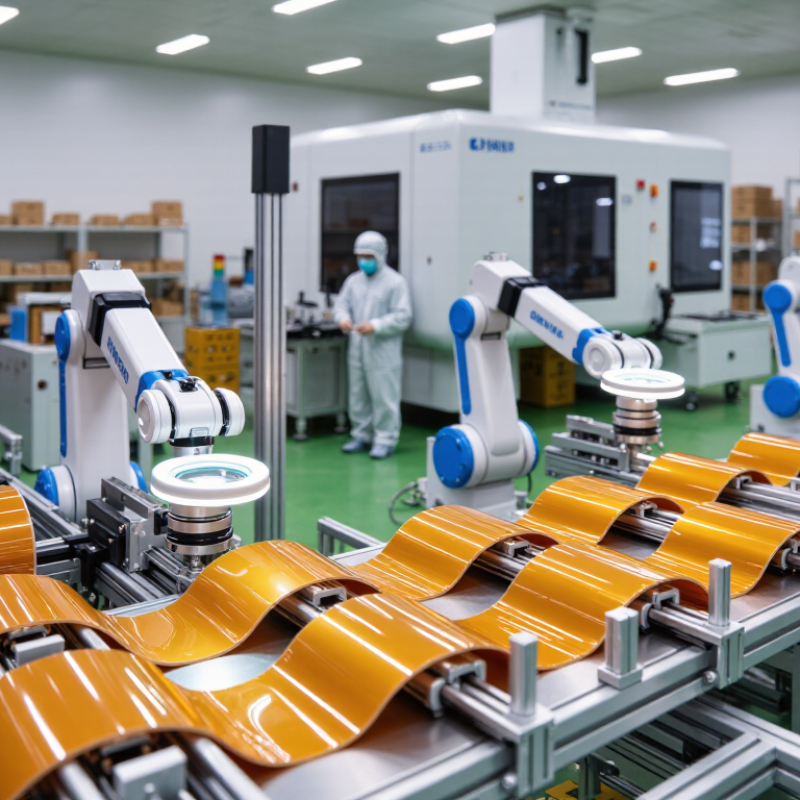
China Top Flexible PCB Manufacturers: How to Choose?
What defines a leading flexible PCB manufacturer in China is practical control, not polished marketing. Experienced teams understand how copper thickness, polyimide selection, and bend radius affect real assemblies. They should explain design limits before quoting a price. Ask for evidence. Review sample cross-sections, impedance reports, solder-mask quality, and surface-finish records. Details matter.
A capable manufacturer uses controlled etching, laser drilling, cleanroom handling, and automated optical inspection. Its engineers should review trace spacing, stiffener placement, connector zones, and repeated-bend requirements. For medical, automotive, or industrial devices, traceability must cover materials, operators, inspection results, and shipment dates. Request process certifications and independent test records, rather than accepting claims without verification. A factory tour or live production audit can reveal more than a brochure.
Reliability also appears in communication. The supplier should provide clear engineering questions, realistic lead times, and corrective-action reports when defects occur. Ask how they handle delamination, lifted pads, dimensional shifts, and failed flex tests. Nothing is perfect. A manufacturer that openly discusses weak points may be more trustworthy than one promising zero risk. I would compare pilot-run data with mass-production results, because early samples can hide process variation. The best choice combines technical judgment, documented experience, and consistent delivery under your actual design conditions.
| Evaluation Dimension | What a Leading Manufacturer Should Demonstrate | Relevant Standard or Evidence | Why It Matters |
|---|---|---|---|
| Flexible PCB Process Coverage | Capability to manufacture single-sided, double-sided, multilayer, rigid-flex, and static or dynamic-flex designs according to the project requirements. | Documented process flow, approved capability matrix, sample build records, and engineering review documentation. | A broader process range reduces the need to change suppliers when design complexity increases. |
| Design-for-Manufacturing Support | Early review of stack-up, bend zones, coverlay openings, hole structures, copper distribution, tolerances, and assembly constraints. | DFM report, controlled design rules, engineering change procedure, and documented customer approval process. | Early engineering feedback helps prevent design revisions, yield loss, and delayed production. |
| Material Selection | Controlled selection of polyimide or other qualified flexible materials, copper foil, coverlay, stiffeners, adhesives, and surface finishes. | Material certificates, lot traceability, specification sheets, and compliance declarations. | Material properties affect flexibility, thermal performance, dimensional stability, and service life. |
| Reliability and Bend Performance | Ability to validate static bending, repeated flexing, bend radius, flex-to-install requirements, and mechanical stress conditions specified by the customer. | Customer-approved test plan, bend-cycle results, cross-section analysis, and reliability reports. | A flexible circuit must remain electrically and mechanically stable throughout its intended operating life. |
| Quality Management System | A documented quality system covering incoming inspection, process control, final inspection, nonconformance handling, corrective action, and internal audits. | Valid ISO 9001 certification and auditable quality procedures. | A formal quality system improves consistency and makes production risks easier to identify and control. |
| PCB Product Acceptance Criteria | Manufacturing and inspection practices aligned with the applicable performance and acceptance requirements for flexible printed boards. | IPC-2223 for flexible printed board design and IPC-6013 for qualification and performance specification; IPC-A-600 may support visual acceptance criteria. | Recognized industry standards create a consistent technical basis for design, qualification, and inspection. |
| Inspection and Testing Capability | Use of electrical testing, automated optical inspection, dimensional inspection, microsection analysis, solderability testing, and other tests required by the product specification. | Equipment list, calibration records, inspection reports, test coverage records, and sample certificates of analysis. | Reliable inspection reduces the risk of open circuits, shorts, dimensional defects, and hidden process failures. |
| Traceability and Process Control | Traceability from raw materials through production lots, inspection results, operator records, equipment status, and shipment documentation. | Lot numbers, barcode records, production travelers, calibration logs, and retention procedures. | Traceability supports root-cause analysis, corrective action, and controlled product recalls when necessary. |
| Application-Specific Compliance | Quality and regulatory controls appropriate for the target market, such as automotive, medical, industrial, aerospace, or consumer electronics applications. | Applicable certificates or audit records, such as IATF 16949 for automotive quality systems or ISO 13485 for medical-device quality systems, where relevant. | Application-specific controls address stricter reliability, documentation, and risk-management expectations. |
| Environmental and Material Compliance | Controls for restricted substances, material declarations, waste handling, and customer-specific environmental requirements. | RoHS and REACH declarations, supplier material documentation, and environmental management records such as ISO 14001 where applicable. | Compliance documentation may be required for market access, customer approval, and responsible supply-chain management. |
| Prototype-to-Mass-Production Transition | A controlled process for prototype fabrication, design verification, pilot production, process validation, and volume manufacturing. | Pilot-build report, first-article inspection, process capability data, approved golden sample, and production release records. | A controlled transfer helps maintain the same electrical, dimensional, and reliability performance at higher volumes. |
| Delivery and Supply Continuity | Clear lead-time commitments, capacity planning, risk management for critical materials, and a documented escalation process. | Production schedule, capacity review, business continuity plan, on-time delivery records, and supplier-risk assessment. | Stable supply is essential when flexible PCBs are part of a time-sensitive or high-volume product. |
| Communication and Technical Service | Fast, technically accurate responses from engineering, quality, production, and customer-service teams throughout the product lifecycle. | Defined communication channels, response-time commitments, issue-tracking records, and engineering change notifications. | Effective communication reduces misunderstandings and speeds up the resolution of technical or delivery issues. |
| Total Cost of Ownership | Evaluation of unit price together with tooling, yield, testing, logistics, rework, warranty exposure, engineering support, and delivery performance. | Detailed quotation, yield assumptions, tooling ownership terms, warranty policy, and cost-breakdown review. | The lowest quoted price does not always produce the lowest overall cost over the product lifecycle. |