

Choosing the best Cat Litter Box is not simply a matter of appearance or price. The right choice depends on your cat’s size, age, habits, mobility, and comfort with enclosed spaces. A small kitten may need a low entrance, while a large or older cat often requires more floor space and easier access. Watch how your cat moves. Hesitation, scratching beside the box, or sudden accidents may signal discomfort rather than stubbornness.
A reliable Cat Litter Box should provide enough room for your cat to turn, dig, and cover waste naturally. Many veterinary behavior specialists recommend a box about one and a half times the cat’s body length. This measurement is practical, though not perfect for every home. Covered boxes can control scattered litter and odors, but some cats dislike trapped smells or narrow doors. Open boxes are easier to inspect and clean. They may also suit nervous cats better.
Material matters, too. Smooth plastic resists absorption and allows thorough washing. High sides can reduce mess, yet they may challenge cats with arthritis or weak balance. Automatic models offer convenience, but moving parts can frighten sensitive pets and still require regular maintenance. Do not trust every marketing claim. Observe your cat’s response for several days. A quiet location, unscented litter, and daily scooping often matter more than expensive features. The best decision may involve compromise, because household cleanliness and feline preference do not always agree.
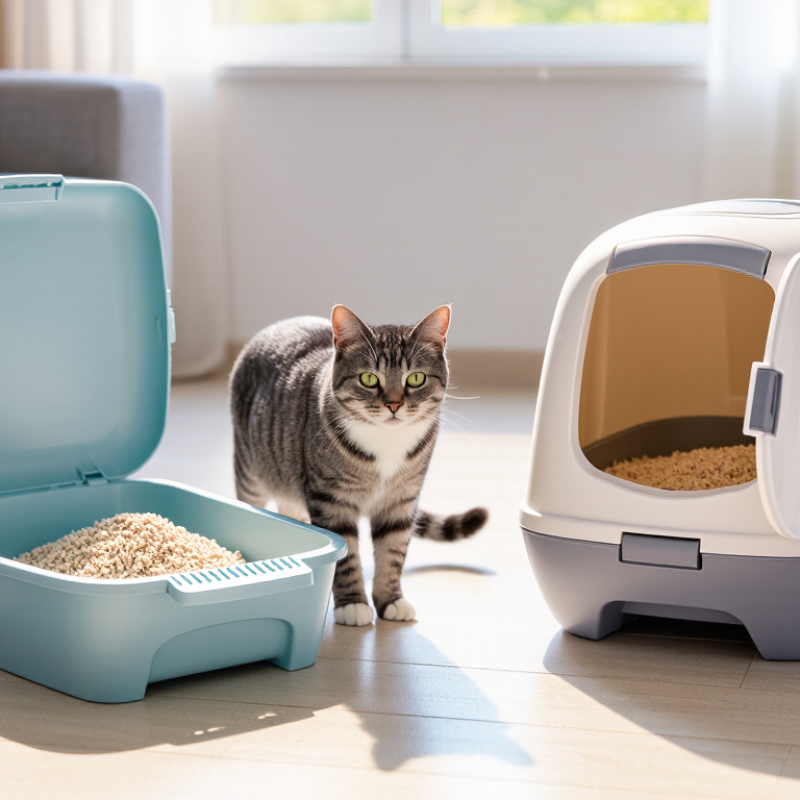
Choosing the best cat litter box starts with your cat, not your décor. Observe where, when, and how your cat eliminates. A kitten may need a low entrance, while an older cat may need a wide opening. Measure your cat from nose to tail base. Choose a box longer than that body length. Your cat should turn, dig, and cover waste comfortably. I once chose a tidy, narrow box for a large cat. It looked efficient, but the cat avoided it.
Tips: Place one box per cat, plus one extra, when space allows. Keep boxes in quiet, reachable areas away from food and noisy appliances. Unscented, low-dust litter is often easier for sensitive cats to accept. Scoop daily and wash the box regularly with mild soap and water. Watch habits after any change. Sudden accidents, straining, or frequent trips need veterinary attention. These signs can signal discomfort, not stubbornness.
Box style should match behavior. A vigorous digger may need high sides, but a covered box can feel cramped. A cat that sprays may need a larger, open design with a washable mat underneath. Test changes slowly. Keep the old box nearby during transitions. My mistake was replacing everything at once. I learned too late that familiar placement mattered more than appearance. Reassess after a week, because preferences can shift.
| Cat’s Need or Habit | Recommended Litter Box Features | Useful Size Guidelines | Best Box Style | Practical Reason |
|---|---|---|---|---|
| Average adult cat | Spacious floor area, stable base, easy access, and enough room to turn around | Interior length should be about 1.5 times the cat’s body length, excluding the tail | Large open box | Adequate space supports comfortable positioning and allows the cat to cover waste naturally |
| Large or long-bodied cat | Extra-long and wide interior with a strong, non-slip base | Choose the largest practical box; the cat should be able to stand, turn, dig, and squat without touching the sides | Extra-large open box | Small boxes can cause cramped postures, litter scatter, or avoidance of the box |
| Kitten or senior cat | Low front entrance, stable floor, and a surface that is easy to step across | Entry height should be low enough for effortless access while retaining enough depth to contain litter | Low-entry box | Reduced mobility makes high walls and steep steps difficult or uncomfortable |
| Cat that sprays or urinates near the wall | High rear and side walls, with a low or notched front entrance | Use a box large enough for the cat to turn away from the entrance before eliminating | High-sided box | Taller walls help contain urine and litter while preserving easier front access |
| Cat that dislikes enclosed spaces | Open top, unobstructed visibility, and multiple escape directions | Provide enough surrounding clearance for the cat to approach and leave without feeling trapped | Open box | Some cats avoid covered boxes because limited visibility can make them feel vulnerable |
| Cat that prefers privacy | Covered design with a wide doorway, good ventilation, and an easy-to-remove lid | The interior should still meet the 1.5-times-body-length guideline | Covered box | Privacy may improve acceptance, but poor ventilation or a cramped interior can discourage use |
| Cat that digs vigorously | Deep litter area, high sides, and a sturdy base that does not slide | Maintain the litter depth recommended for the selected litter, commonly around 5–7 cm | Deep high-sided box | Extra containment reduces litter tracking and prevents waste from being exposed too quickly |
| Cat that is sensitive to odors | Large open ventilation area, unscented litter compatibility, and frequent cleaning access | Place the box in a well-ventilated area away from food and water | Open or ventilated box | Strong fragrance and accumulated odor can make a cat avoid an otherwise suitable box |
| Cat that shares a home with other cats | Multiple boxes in separate, quiet locations with more than one route of exit | A common guideline is one box per cat plus one additional box | Several accessible boxes | Distributed resources reduce competition, blocking, and stress-related elimination problems |
| Cat that prefers a specific litter texture | Box material and shape that can be used consistently with the cat’s preferred litter | Keep litter depth and texture stable; change gradually when necessary | Simple open box | Many cats respond more strongly to litter texture and cleanliness than to decorative box features |
| Cat that frequently kicks litter outside | High sides, a broad surrounding mat, and an entrance that does not face a narrow walkway | Use sufficient floor space without making the entrance difficult to reach | High-sided box with mat | Box placement and entrance direction can reduce tracking as much as the box design itself |
| Cat with a history of litter-box avoidance | Quiet location, easy access, unscented litter, and a clean, spacious interior | Offer a temporary choice of box styles and observe which one the cat uses consistently | Large open test box | Preference testing helps identify whether size, location, entry height, litter, or privacy is the issue |
General guidance: scoop waste at least once daily, clean the box regularly, and place it in a quiet location that is easy for the cat to reach. Individual preferences vary, so observe your cat’s posture, digging behavior, entry comfort, and box-use consistency.