How to Choose Plaza Musical Fountains in 2026?
Choosing Plaza Musical Fountains in 2026 requires more than comparing lighting effects or pump capacity. A successful installation must combine visitor experience, water efficiency, safety, maintenance, and measurable operating costs. The Global Wellness Institute’s 2024 report valued the global wellness economy at $6.3 trillion in 2023. This growth strengthens demand for public spaces that support relaxation, social connection, and memorable experiences. Yet beauty alone is not enough.
The United Nations World Water Development Report 2024 highlights increasing pressure on global water resources. Therefore, buyers should examine recirculation systems, filtration performance, evaporation control, and smart scheduling. Energy monitoring also matters. A dramatic evening show can become an expensive daily habit. A perfect show is not always a wise purchase.
Mark Fuller, founder of WET, has described water as “the most powerful element on Earth.” His view reflects the emotional strength of carefully designed water experiences. However, emotional impact must work beside engineering discipline. In 2026, project owners should assess nozzle precision, LED lifespan, acoustic control, accessibility, winter protection, and local service response. These details decide whether a fountain remains impressive after its opening ceremony.
This guide explores how to compare Plaza Musical Fountains for plazas, hotels, cultural districts, and commercial developments. It considers design flexibility, lifecycle value, digital control, and environmental responsibility. Industry data can guide decisions, but it cannot replace site testing. Every plaza has different wind, drainage, footfall, and maintenance conditions. That is where many purchasing plans become too optimistic.
Understanding Plaza Musical Fountain Types and Applications
How to Choose Plaza Musical Fountains in 2026?
Understanding Plaza Musical Fountain Types and Applications
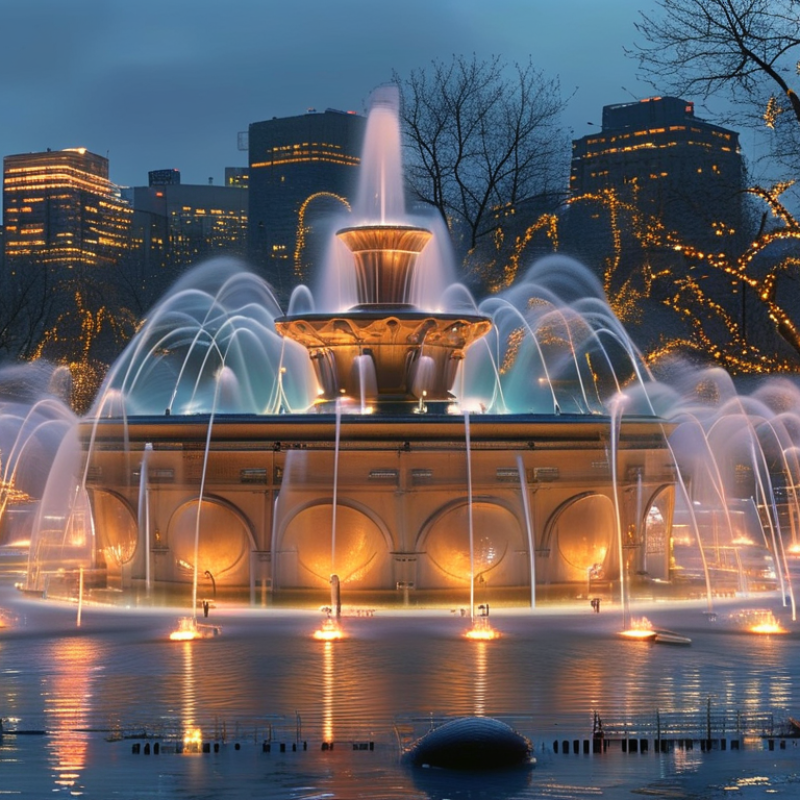
Plaza musical fountains combine water, lighting, movement, and programmed sound. The right type depends on space, visitors, climate, and maintenance capacity. Dry-deck fountains place nozzles beneath a level surface, allowing people to walk across the plaza when the system is inactive. They suit civic squares, shopping areas, and public event spaces. Interactive fountains use sensors or timed controls, letting children influence water patterns. They create strong engagement, but their controls require regular inspection.
Floating fountains work well on large ponds or artificial lakes. Their sprays can be viewed from a distance, making them suitable for resorts, parks, and waterfront developments. Wall-mounted or architectural fountains fit narrower plazas and emphasize building façades. They often need less floor space, although sound reflection can become difficult near hard surfaces.
Look beyond visual impact. Check water treatment, drainage, pump access, nozzle protection, and winterization requirements. A shallow dry-deck system may appear simple, yet blocked drains can interrupt daily operation. Acoustic testing matters too. Loud music may disturb nearby offices, while weak speakers can disappear in open air. Experienced project teams usually test sightlines from benches, entrances, and accessible routes before finalizing nozzle layouts.
A dramatic show is not always the best choice. Sometimes, a smaller sequence feels more elegant. I have seen designs favor complex effects while overlooking cleaning time and replacement access. That mistake is costly. Ask for maintenance records, control-system documentation, safety testing, and realistic operating estimates before approval. Performance should remain attractive after months of ordinary use.
Defining Site Requirements, Visitor Experience, and Performance Goals
How to Choose Plaza Musical Fountains in 2026?
Site requirements should guide the fountain before visual effects. Measure the plaza footprint, underground utilities, wind exposure, drainage, and pedestrian routes. A hydraulic engineer should confirm pump capacity, nozzle height, splash control, and maintenance access. Water quality also matters. WHO guidelines for safe recreational water environments emphasize risk management, hygiene, and regular monitoring. Avoid placing mist or spray near food stalls, electrical equipment, or slippery stone.
Visitor experience must feel clear, safe, and memorable. UN Tourism’s World Tourism Barometer reported about 1.4 billion international arrivals in 2024. That scale increases pressure on public spaces to handle crowds, languages, and different mobility needs. Design wide viewing zones, tactile routes, shaded seating, and timed shows under five minutes. The Global Wellness Institute valued the wellness economy at $6.3 trillion in 2023. Quiet intervals may therefore matter as much as loud music. Bigger is not always better. A dramatic show can still feel tiring.
Tips: Build one dry test zone first. Record sound levels from nearby apartments and shops. Use WaterSense’s 20% water-saving benchmark when comparing equipment, even though it is not fountain-specific. Program low-energy weekday scenes and stronger weekend performances. Ask visitors for feedback after opening. Some assumptions will be wrong. Revise them.
How to Choose Plaza Musical Fountains in 2026? - Defining Site Requirements, Visitor Experience, and Performance Goals
This planning model assigns 100 decision points across the factors that most directly influence fountain suitability. Higher scores indicate a greater priority during site evaluation and concept selection.
How to read the chart: Site readiness confirms that utilities, drainage, structure, and maintenance access can support the installation. Visitor experience focuses on visibility, comfort, accessibility, and programming variety. Performance goals measure synchronization quality, water display clarity, energy control, and long-term reliability.
Comparing Water, Lighting, Sound, and Control System Features
How to Choose Plaza Musical Fountains in 2026?
Water, lighting, sound, and control systems must be designed as one experience. I begin with water behavior, not visual effects. Nozzle spacing, wind exposure, filtration, and pump redundancy shape every performance. A 2024 report from the International Energy Agency states that lighting still represents about 15% of global electricity consumption. Efficient fixtures matter, but poor aiming wastes energy and weakens reflections. Test colors on wet stone at night. Screens often mislead.
Lighting should offer accurate color rendering, smooth dimming, and protection against moisture. The U.S. Department of Energy’s 2023 solid-state lighting research roadmap identifies laboratory LED efficacies above 200 lumens per watt, though real installations usually perform lower. That gap deserves attention. Ask for measured output, not only laboratory claims. Use warm white scenes for architectural details and restrained color changes near pedestrian areas.
Sound needs clarity without turning the plaza into a pressure zone. The World Health Organization’s Environmental Noise Guidelines for the European Region recommend keeping average environmental noise below 70 dB over 24 hours to reduce hearing risks. A fountain should use distributed speakers, delay alignment, and automatic limiting. Control systems should log pump faults, water levels, temperature, lighting status, and show schedules. Open protocols based on IEC 62386 can improve integration, but compatibility is never guaranteed. Request a live demonstration with rain, wind, and a failed sensor. I would still allow manual control; automation sometimes behaves beautifully until it does not.
Selecting Suppliers, Reviewing Proposals, and Planning Installation
How to Choose Plaza Musical Fountains in 2026?
Selecting Suppliers, Reviewing Proposals, and Planning Installation
Choosing a musical fountain begins with the supplier, not the visual effect. Request evidence from comparable plaza projects, including water depth, climate, visitor traffic, and maintenance records. Ask who designed the hydraulic system and who will supervise installation. Experienced teams should explain pump efficiency, nozzle materials, filtration, lighting control, and electrical protection in clear language. Vague answers are warning signs.
Review every proposal line by line. Compare water consumption, sound levels, power demand, warranty terms, spare parts, and annual service costs. A low purchase price may hide difficult access to pumps or expensive seasonal cleaning. Require drawings showing drainage channels, equipment rooms, cable routes, and emergency shutoffs. Check whether the proposed schedule includes permits, concrete curing, testing, and staff training. Beautiful renderings are not engineering documents.
Plan installation around the plaza’s real conditions. Survey underground utilities before excavation. Confirm the fountain will not obstruct pedestrians, delivery vehicles, or accessible routes. Test water quality and drainage during a realistic operating cycle. Weather can delay work. It often does. Leave contingency time. One weak assumption can disturb the entire schedule. I would also ask for a full-scale nozzle test, although space and budget may make this impractical. That limitation should be recorded, not quietly ignored.