

Wire Rope Thread Lifting Loop products look simple: a threaded steel fitting, a loop, and a rated lifting point. In service, small details matter. Thread engagement, rope construction, termination quality, and clear load markings can affect how reliably a connection performs. Buyers comparing China’s leading manufacturers should therefore look beyond price and catalogue photographs.
Grand View Research’s wire-rope market analysis projects continued global growth, at roughly 5% annually through 2030. That trend reflects demand across construction, marine, mining, and industrial handling. It does not prove that every lifting loop is suitable for every job. ISO 4309:2017 provides guidance on the care, inspection, and discard of crane wire ropes; product selection still requires checking the manufacturer’s specifications, compatibility, and traceability. A stamped working-load limit and a legible inspection record are practical details, not decoration.
This guide compares ten Chinese manufacturers by product range, technical documentation, quality controls, customization, and export experience. The aim is to help readers ask sharper questions before requesting a quotation. One sourcing caution: the material provided does not identify a verifiable individual expert or published quotation on Wire Rope Thread Lifting Loop products. Rather than invent a specialist’s words, this introduction relies on recognized technical guidance and published market analysis. That gap is worth correcting before publication: a properly sourced expert comment would add useful perspective, especially on inspection and safe application.
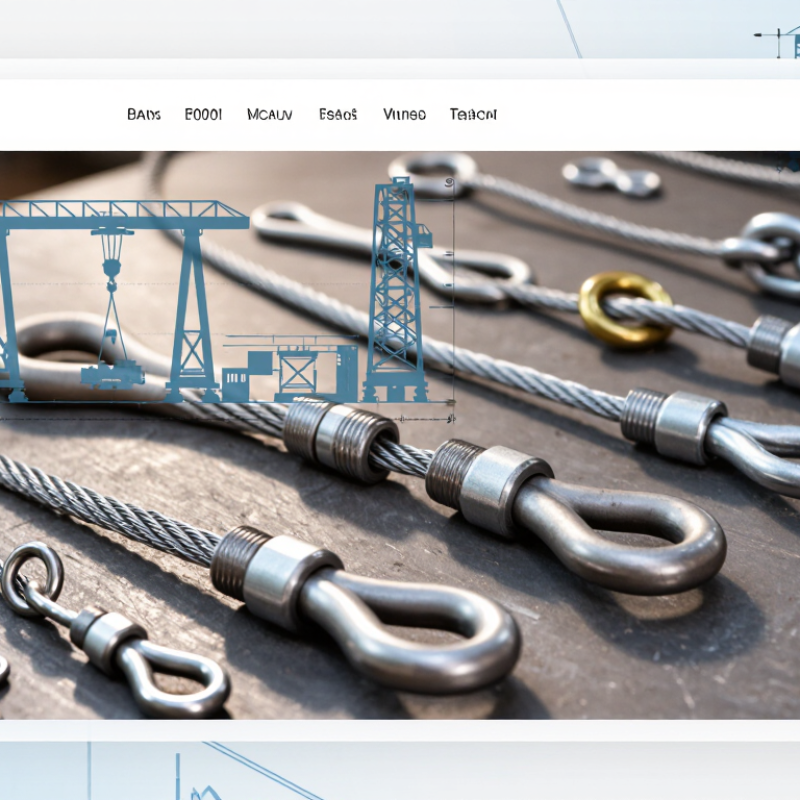
A wire rope threaded lifting loop combines a flexible steel-wire-rope loop with a threaded end fitting. The loop may include a thimble, which helps protect the rope where it bends. A pressed sleeve or other specified termination holds the rope ends together. The threaded fitting connects to a compatible tapped lifting point or fixture. Names vary between suppliers, so the product drawing matters.
During a lift, the loop carries force through its rope strands and termination into the threaded connection. Keep the load aligned with the fitting’s intended direction. Side loading or a poor thread match can create stress that is hard to see. Check that the threads engage fully and that the bearing surfaces sit flush.
Not guesswork.
Before use, inspect for broken wires, crushing, corrosion, loose sleeves, or damaged threads. Confirm the assembly’s rated capacity from its documentation; rope diameter alone does not establish a safe load. Angle, termination type, and the attached structure can all affect performance. This is where routine practice can become complacent. A clean-looking loop may still have hidden damage, so inspection should follow the equipment maker’s instructions and site procedures.
Wire rope threaded lifting loops depend on material choice as much as rated capacity. Manufacturers commonly select steel wire rope for strength and a forged or machined threaded end for a secure connection. The rope’s construction, wire diameter, and core affect flexibility and resistance to crushing. Details matter. In damp or corrosive settings, a protective finish may slow surface rust, but it cannot replace suitable material selection or routine inspection. Buyers should check material records, working-load information, and thread dimensions against the intended lifting arrangement.
Production typically begins with cutting and forming the rope, then securing its termination with a suitable swaged fitting or other engineered method. The threaded section is machined to specified dimensions, while the loop is shaped to avoid sharp bends that can damage individual wires. Each process needs controlled tooling and trained operators. Inspection may include checking thread fit, termination condition, dimensions, and load-test records, according to the product specification. A neat finish is useful, but it does not prove the assembly is sound. One point deserves careful review: coatings and compact fittings can make wear harder to see, so inspection access should be considered during design.
Standardized rope grade designations shown as nominal tensile strength in MPa.
Rope grades describe the tensile strength class of the wire rope, not the lifting capacity of a finished loop. Actual capacity depends on rope diameter and construction, loop or termination design, installation, and applicable certification.
wire rope lifting loops should be judged bytraceable evidence, not polished photographs. Ask manufacturers for material certificates, construction details, rated capacity, and batch-level test records. EN 13414-1 covers safety requirements for steel wire rope slings, while ASME B30.9 addresses sling use, inspection, and maintenance. These standards provide useful reference points, but buyers should confirm which edition and configuration apply. A test report should identify the sample, load applied, equipment calibration, and acceptance criteria. A number without context is weak evidence.
Inspection needs both a schedule and trained eyes. Before each use, check for broken wires, crushed strands, corrosion, damaged end fittings, and an unreadable identification tag. Record findings and remove questionable loops from service until a competent person assesses them. The U.S. Bureau of Labor Statistics reported 5,283 fatal work injuries in 2023; this broad workplace figure is not specific to lifting gear, but it underscores why inspection systems matter. Even a tidy certificate can leave questions.
Tips: Request sample inspection records and verify the test machine’s calibration date. Photograph the loop’s tag and fittings before use. Keep records by serial number. Real workshops are busy, and small defects can be missed; independent checks help, but they do not replace sound handling.
China’s wire rope thread lifting loop manufacturers vary in tooling, inspection routines, and order flexibility. These ten profiles highlight capabilities buyers can compare, rather than unverified company rankings.
A profile is only a starting point. Ask for drawings, stated material grades, load information, and inspection records before comparing quotations. Check whether the quoted product matches the intended rope diameter and connection method. A neat catalog is not proof of consistent production. That detail is easy to miss. Some suppliers may also need clarification when a drawing leaves tolerances or thread details open.
Tips: Request a sample or production photos, and confirm how dimensions are checked. Compare documentation and response quality, not just price. Allow time for a second review; unclear specifications can lead to avoidable rework.
Wire-rope thread lifting loops are used to connect lifting equipment to threaded anchor points on machinery, molds, and precast components. Their compact form helps in tight spaces, where a larger lifting attachment may not fit. Applications differ, though. A workshop handling steel fixtures faces different wear and contamination than a site lifting concrete panels. Buyers comparing manufacturers in China should match the product design to the actual lifting direction, working environment, and connection geometry.
Compare documented working load limits, thread dimensions, rope construction, and material specifications. Check whether the stated capacity applies to straight pulls only or includes angled loading. Ask how samples are inspected and tested, and request traceable test records for the relevant product type. Clear answers matter. So does consistency between drawings, labels, and delivered goods. Packaging and corrosion protection deserve attention for long-distance shipping. A low price can look attractive, but unclear tolerances may cause costly fit problems. Even experienced buyers can overlook thread engagement depth.
Tips: Send a drawing or exact thread measurements before requesting a quote. Confirm the intended load direction, and inspect a sample for smooth threading, visible rope damage, and legible identification marks. A rushed check is not enough.
| No. | Comparison Criterion | What to Compare or Verify | Application Relevance | Useful Evidence |
|---|---|---|---|---|
| 1 | Working Load Limit (WLL) | Check the WLL marked for the complete lifting assembly and confirm it applies to the intended configuration. Do not treat the rope’s breaking strength as the assembly’s WLL. | Essential for selecting equipment for machinery installation, material handling, and construction lifts. | Product marking, technical data sheet, and load-test documentation for the specified assembly. |
| 2 | Load Direction and Lift Configuration | Verify the manufacturer’s permitted loading directions, sling angles, and any reduction factors. Use a lifting point in an angled or side-loaded condition only when that condition is explicitly rated. | Relevant to multi-leg rigging, confined-space lifts, and installations where the load may not remain aligned with the lifting point. | Load-angle charts, configuration drawings, and instructions for use. |
| 3 | Thread Size and Engagement | Confirm thread diameter, pitch, thread form, usable length, and compatibility with the tapped hole or mating component. Ensure adequate thread engagement as specified for the product and installation. | Important when attaching lifting loops to machinery, fixtures, molds, and structural components. | Dimensioned drawings, thread tolerances, and installation guidance. |
| 4 | Wire Rope Construction | Compare rope diameter, construction, core type, grade, and stated rope specification. The appropriate construction depends on flexibility, handling, and the intended duty. | Useful for choosing assemblies for repeated handling, general lifting, or applications requiring a particular rope arrangement. | Rope specification and, where applicable, conformity information referencing standards such as ISO 2408 or the EN 12385 series. |
| 5 | End Termination and Assembly | Identify the termination method and confirm that the rope, termination, threaded fitting, and other components are designed and rated as one assembly. | Relevant wherever the rope loop transfers load through a socket, ferrule, eye, or other end fitting. | Assembly drawing, component specifications, inspection procedure, and applicable test records. |
| 6 | Material and Corrosion Protection | Verify fitting and rope materials, surface treatment, and any stated restrictions for wet, marine, chemical, or outdoor environments. Do not assume a coating makes a product suitable for every corrosive environment. | Important for ports, outdoor construction, food-processing areas, and other environments where corrosion may affect service life. | Material declarations, coating details, and environmental-use limitations. |
| 7 | Inspection and Traceability | Check whether the product carries legible identification and whether each assembly can be traced to its production or inspection records. Confirm recommended inspection and retirement criteria. | Supports safe use, maintenance planning, and records management for lifting equipment. | Identification markings, batch or serial traceability, inspection instructions, and quality records. |
| 8 | Applicable Standards and Regulations | Ask which standards and regulations apply to the specific product, market, and use. Standards for wire ropes, wire-rope slings, and rigging hardware address different product types and should not be treated as interchangeable. | Helps buyers assess products for projects with defined legal, contractual, or site requirements. | Product-specific conformity documents; references may include EN 13414 for wire-rope slings or ASME B30.9 for slings, where applicable. |
| 9 | Operating Conditions | Confirm stated temperature limits and restrictions involving shock loading, abrasion, sharp edges, chemicals, or repeated bending. Follow the product instructions rather than assuming a generic capacity. | Relevant to foundries, industrial plants, construction sites, and applications with unusual handling or environmental conditions. | Operating instructions, limitations, and maintenance recommendations. |
| 10 | Technical Support and Supply Consistency | Compare the availability of drawings, product data, replacement assemblies, inspection guidance, and support for confirming an application’s requirements. | Useful for repeat orders, equipment standardization, and projects that require documented technical review. | Current technical files, written application guidance, and consistent product identification across orders. |
Note: This table is a manufacturer-comparison checklist, not a verified ranking of individual companies. Always confirm the rated capacity and suitability of the complete assembly for the actual lift, and follow applicable regulations and the manufacturer’s instructions.

