

Choosing a Chinese Electric Winch manufacturer is not just a price comparison. Buyers need to match equipment to the load, duty cycle, and installation conditions. A winch used on a boat trailer faces different demands from one installed on a service truck or industrial platform. Small details matter: rated line pull, drum capacity, rope compatibility, brake design, motor rating, and mounting footprint. These factors affect safety, service life, and daily usability. Not glamorous, but important.
This guide introduces ten Chinese manufacturers and offers a practical starting point for comparing them. The list should not be treated as a universal verdict. Product ranges change, and catalog specifications may not reflect real operating performance. Ask for current datasheets, load-test records, warranty terms, spare-parts availability, and clear installation guidance. Check the exact model, not only a company’s headline capacity. That distinction matters. Where available, compare certification information and independent customer feedback, then confirm details directly with the supplier. Manufacturer claims deserve verification. A lower quote may exclude controls, cables, or mounting hardware. A familiar brand is not automatically right for every application. This overview aims to make a shortlist clearer, while leaving room for checks only the buyer can complete. Honestly, those checks take time. They are worth it.
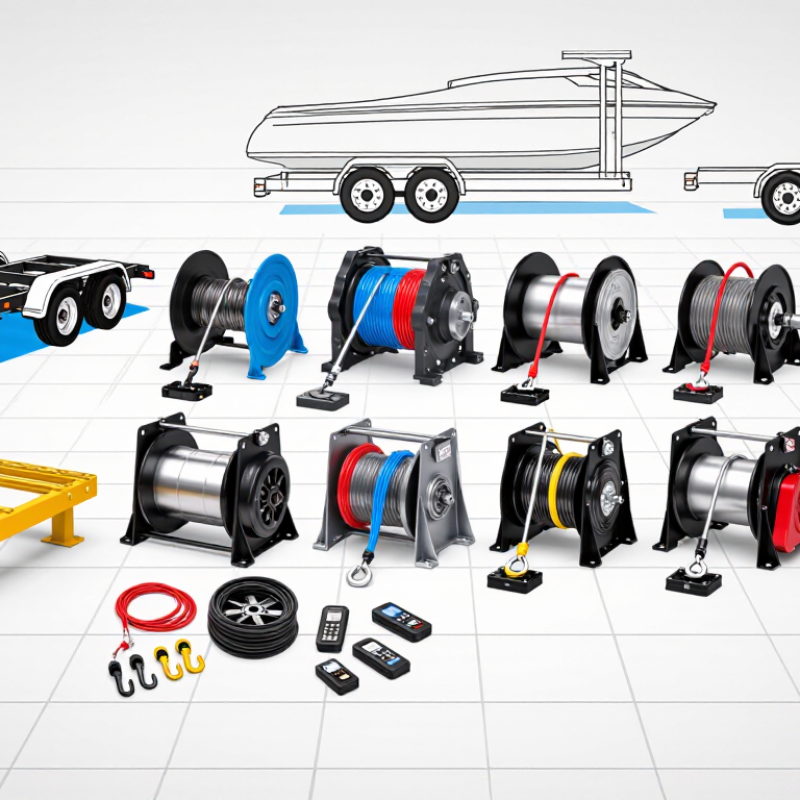
When comparing electric winches, check what “rated line pull” actually describes. It commonly refers to the first drum layer, where the effective drum radius is smallest. As rope builds up, that radius grows and available pull falls. The relationship is simple: line pull equals drum torque divided by effective radius. If radius rises by 20 percent, pull drops about 17 percent, assuming unchanged torque. The Wire Rope Technical Board’s Wire Rope Users Manual explains why drum and rope geometry matter; the calculation is a useful reminder, not a substitute for the winch’s layer-by-layer load chart.
Small detail. A drum may look roomy, yet the outer layers can change both pulling force and rope capacity. Compare rated pull, rope diameter, drum dimensions, and the number of working layers together. Brake details deserve equal attention. ASME B30.7-2021 covers winch construction, inspection, and testing; buyers should distinguish a holding brake from a dynamic brake. The former is intended to keep a load from drifting when power is off, while dynamic braking controls motion during operation. Ask for the brake’s holding-load rating and test documentation, not just a statement that a brake is included. One imperfect habit persists: people often compare headline pull figures alone. That can make two unlike winches seem equivalent.
This table is a general specification guide, not a manufacturer ranking. The values are illustrative nominal configurations; actual ratings and features vary by model and duty cycle.
| Example Class | Illustrative Rated Line Pull | Rating Reference | Illustrative Drum Capacity | Common Brake Arrangement | Typical Selection Consideration |
|---|---|---|---|---|---|
| Compact utility | 0.5 t (about 4.9 kN) | Rated pull is normally specified at the first rope layer unless the datasheet states otherwise. | 3–4 layers | Automatic load-holding brake, often electromagnetic or mechanical | Check supply voltage, mounting space, and the duty cycle stated by the manufacturer. |
| Light-duty handling | 1 t (about 9.8 kN) | Confirm whether the stated figure is line pull or a different measure such as lifting capacity. | 3–4 layers | Load-holding brake matched to the motor and drive | Use the rated pull for the intended rope layer, not just the maximum capacity printed in a listing. |
| Workshop duty | 2 t (about 19.6 kN) | Pull available at the drum generally decreases as rope builds up on the drum. | 3–5 layers | Electromagnetic or mechanical holding brake | Allow for rope, hook, and rigging weight when assessing the load and system limits. |
| Vehicle or equipment recovery | 3 t (about 29.4 kN) | Published pull ratings should be checked against the first-layer rating and the maker’s load chart. | 3–5 layers | Automatic brake; dynamic braking may also be specified | Recovery loads can exceed static vehicle weight; use suitable anchors and rated rigging. |
| Industrial material handling | 5 t (about 49.0 kN) | Capacity depends on the effective drum radius and the number of rope layers. | 4–5 layers | Load-holding brake, with system-level braking requirements verified | Confirm the required operating class, starts per hour, and expected running time. |
| Heavy workshop or plant duty | 8 t (about 78.5 kN) | Use the model-specific line-pull chart; capacity is not necessarily constant across layers. | 4–5 layers | Brake selected for the rated load and operating conditions | Check the supporting structure, reeving arrangement, and electrical protection. |
| Heavy industrial handling | 10 t (about 98.1 kN) | Rated line pull is distinct from the load capacity of the complete lifting system. | 4–5 layers | Load-holding brake; independent braking provisions may be required by the application | Verify applicable local codes and whether the unit is approved for lifting people or loads. |
| Large-capacity installation | 15 t (about 147.1 kN) | Check pull at each working layer and the specified rope arrangement. | 4–6 layers | Brake configuration specified for the complete drive system | Assess heat dissipation, operating frequency, and emergency-stop requirements. |
| Very heavy industrial duty | 20 t (about 196.1 kN) | Capacity figures must be interpreted using the manufacturer’s exact rating conditions. | 4–6 layers | Engineered load-holding brake system | Review structural loads, rope fleet angle, and inspection and maintenance access. |
| Project-specific heavy duty | 30 t (about 294.2 kN) | Configuration-specific; no single line-pull value applies to every drum layer or reeving setup. | Project-specific | Application-engineered braking and control system | Require a complete technical proposal covering load cases, duty, controls, and applicable standards. |
Note: Tonnes shown here are metric tonnes. Approximate force conversions use 1 tonne-force ≈ 9.81 kN. A winch’s rated line pull is not automatically the same as a safe working load for lifting; follow the product documentation and applicable regulations.