Best PCB Printing Techniques for Global Buyers?
In the competitive world of electronics, the demand for innovative PCB printing techniques is on the rise. As buyers seek quality and efficiency, the insights of industry experts become invaluable. Renowned PCB printing specialist, Dr. Emily Tan, emphasizes, “The right printing technique can significantly impact the performance and reliability of a PCB.” Her words resonate with many buyers navigating the complexities of PCB manufacturing.
Understanding the various PCB printing techniques is crucial for global buyers. Each technique has unique benefits and challenges that can influence overall production. From screen printing to inkjet printing, the choices are vast. Buyers must consider factors like cost, lead time, and material compatibility. However, the overwhelming options can lead to decision fatigue, prompting a need for careful reflection on their specific needs and capabilities.
Moreover, it is essential to recognize that while some techniques promise high precision, they may also present challenges. Potential issues, like material waste or production delays, require thorough evaluation. As the market evolves, staying informed about advancements and their practical implications is vital for making sound decisions in the realm of PCB printing.
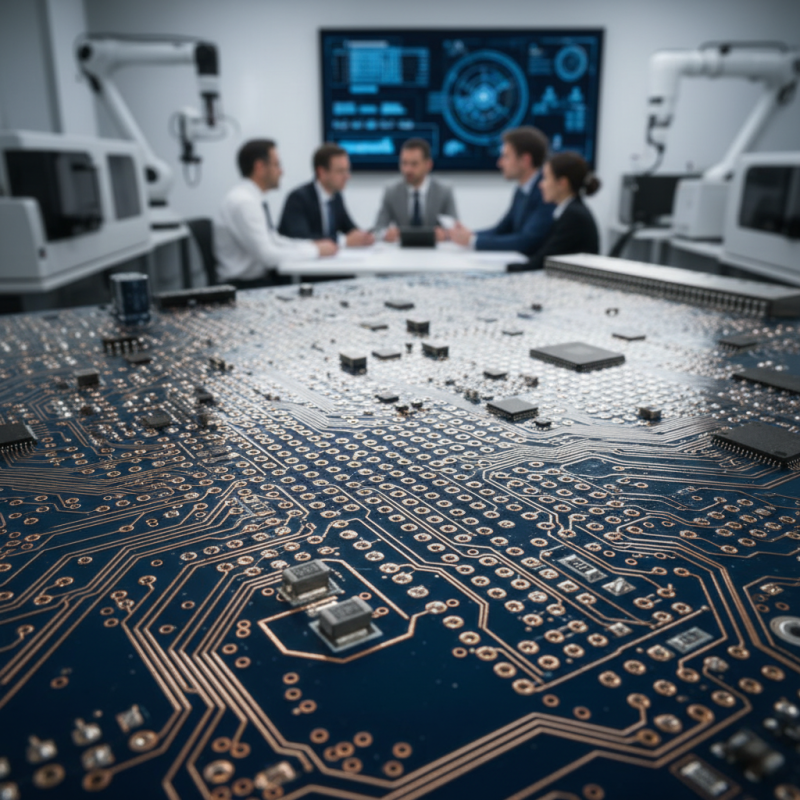
Overview of PCB Printing Techniques and Their Importance
PCB printing techniques play a crucial role in the electronics industry. They ensure that circuit boards function correctly in various applications. Different methods are used based on specific needs. These methods range from screen printing to inkjet printing. Each technique has unique benefits and challenges.
Screen printing is widely popular due to its cost-effectiveness for large-scale production. However, it may not capture fine details. Inkjet printing offers precision, making it suitable for intricate designs. Yet, it can be slower, leading to longer production times. Understanding the strengths and weaknesses of each method is essential for buyers. Choices depend on project requirements and budget constraints.
Moreover, the materials used in PCB printing affect the overall quality. High-quality inks and substrates result in better durability and performance. While many buyers focus on cost, quality should never be compromised. Mistakes can lead to faulty circuits, resulting in project delays. Emphasizing reliability in selection can save time and effort in the long run. It's important to recognize that evolving technology constantly impacts these techniques, necessitating ongoing learning and adaptation.
Key Factors to Consider When Choosing a PCB Printing Technique
When selecting a PCB printing technique, several key factors come into play. Cost is paramount. According to industry reports, approximately 40% of manufacturers cite budget constraints as a leading factor. Choosing a cost-effective printing method can significantly impact the overall production cost. However, cheaper options might compromise quality.
Material compatibility is equally crucial. Printed circuit boards (PCBs) must endure various environmental stresses. A report by IPC states that nearly 30% of failures arise from improper material selection. It’s essential to evaluate whether the chosen technique works well with specific substrates. Inconsistent performance in diverse environments requires careful assessment and adjustments.
Another consideration is the speed of production. The demand for rapid turnaround times is rising, with recent surveys indicating that 70% of clients prioritize quick delivery. Yet, hastening the printing process can lead to defects. Balancing speed and quality should remain a focal point in the decision-making process. Thus, understanding these elements will help buyers make informed choices about PCB printing techniques.
Comparison of Popular PCB Printing Techniques: Pros and Cons
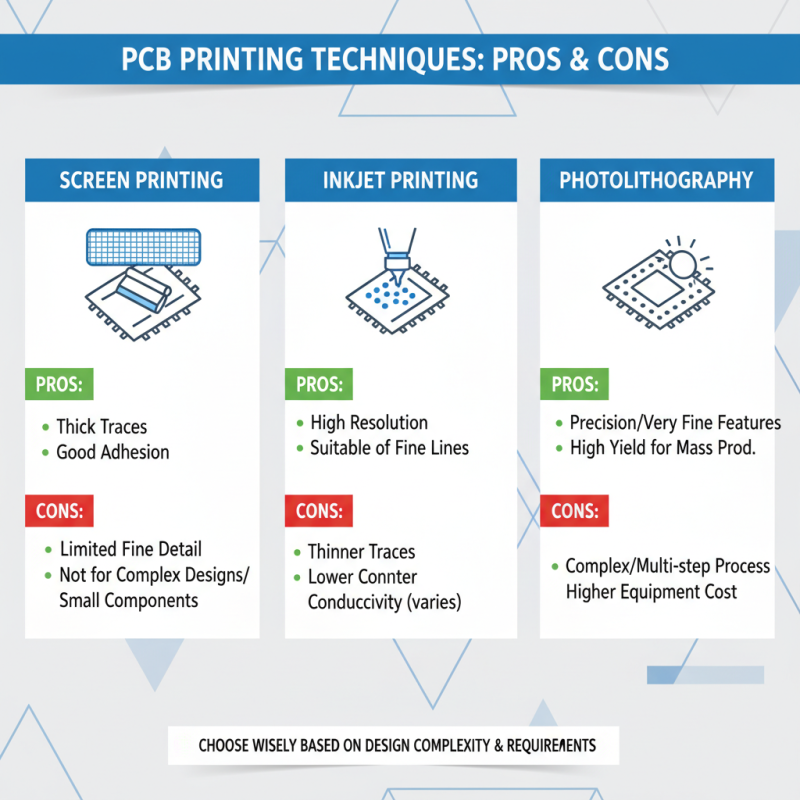
When choosing PCB printing techniques, it's vital to understand their pros and cons. For instance, screen printing is commonly used. It offers thick traces and good adhesion. However, it has limitations in fine detail. This technique often struggles with small components. As a result, it may not suit complex designs. Buyers need to weigh these factors.
Another popular method is direct inkjet printing. This approach allows for high-resolution images and flexibility. It works well for prototypes and small runs. Yet, the equipment can be costly, and the ink may have issues with durability. Buyers should consider the long-term effects of using this method.
Lastly, laser direct imaging is gaining traction. It provides precision and accuracy, making it ideal for intricate circuits. However, it requires significant investment. Maintenance can also be a burden. Evaluating these factors is essential for buyers. They must reflect on their specific needs before making a decision.
Emerging Technologies in PCB Printing: Trends and Innovations
Emerging technologies in PCB printing are reshaping the landscape for global buyers. One notable trend is the rise of additive manufacturing, often referred to as 3D printing. This method allows for customized circuit designs that traditional techniques cannot achieve. Manufacturers can quickly prototype PCBs, which enhances innovation and reduces time to market.
Furthermore, automated inspection systems are gaining traction. These systems utilize advanced algorithms to detect defects. This improves quality assurance processes, though it introduces challenges in setup and calibration. Not all manufacturers have adapted to these automated systems, leading to disparities in production quality.
Sustainability is another critical aspect of new PCB printing technologies. Eco-friendly materials are now available, but their adoption is uneven. Some manufacturers resist change due to cost factors. In contrast, others embrace these materials, underscoring a commitment to environmental responsibility. The gap in adoption raises questions about long-term sustainability in the industry.
Best Practices for Sourcing PCB Printing Services Globally
When sourcing PCB printing services globally, understanding the nuances of quality and reliability is crucial. Reports indicate that around 42% of buyers experience issues with substandard manufacturing practices. This often results in costly redesigns and delays. Choosing a provider with solid quality assurance practices is essential. Look for companies that adhere to industry standards like IPC-A-600 or IPC-A-610. Certification ensures a baseline for manufacturing excellence.
Cost isn’t the only factor to consider. Many buyers overlook the importance of communication and timeliness. Approximately 38% of procurement professionals say poor communication is a significant hurdle. Establishing clear channels of dialogue can enhance the relationship. It’s not uncommon to hear complaints about slow response times. Suppliers must be aware of the importance of timely updates on project status.
Lastly, geographical location can impact PCB sourcing. While overseas options can be cost-effective, they may introduce complications like transportation delays. A survey showed that 67% of companies prefer domestic suppliers for better turnaround times. Reflecting on these factors leads to improved decision-making. Balancing cost, quality, and communication is a multifaceted challenge that requires careful thought.