

Choosing Silicone Decorative Molds for wholesale orders in 2026 takes more than comparing floral patterns, cavity counts, and catalog prices. A detailed rose mold may photograph beautifully but tear around thin petals during repeated demolding. A geometric tray mold might release cleanly yet produce uneven edges if its walls lack support. Details matter. For buyers serving candle makers, resin artists, and home décor brands, those differences can affect returns and repeat orders. The best choice depends on the casting material, production schedule, and finish your customers expect.
A useful supplier review starts with measurable specifications: cavity dimensions, silicone hardness, wall thickness, and the recommended working temperature range. Ask for samples. Test them with your actual wax, resin, plaster, or other intended casting material before committing to volume. Check small details, including trapped bubbles near lettering, distortion along flat bases, and residue after cleaning. Request documentation that matches the product and its intended use, especially when suppliers advertise food-contact suitability. A vague “premium silicone” claim provides little evidence of consistent performance. Even a promising sample leaves questions about batch consistency.
This guide approaches the best Silicone Decorative Molds through practical buying criteria: design quality, material suitability, durability, customization, and total purchasing cost. Look beyond price. Compare minimum order quantities, packaging protection, replacement terms, and lead times alongside the quoted unit cost. Attractive designs deserve attention, but a simpler mold may deliver better margins when production becomes repetitive. No shortlist fits every buyer perfectly. The goal is a defensible purchasing decision, with clear trade-offs and fewer expensive surprises after delivery.
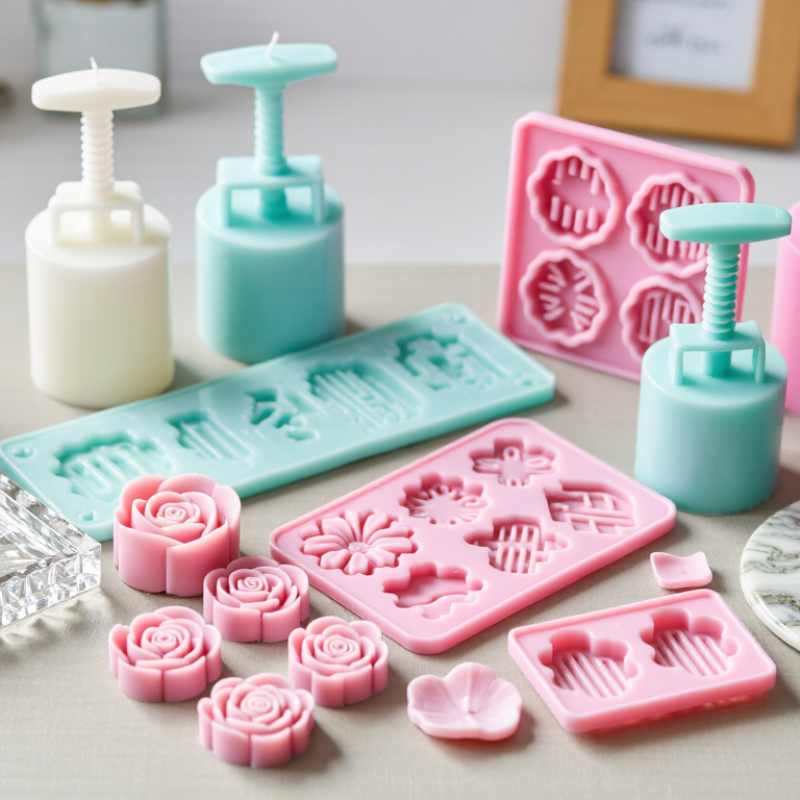
Decorative molds are commonly made from silicone elastomers, but formulations vary by intended use. For wholesale buyers, ask for the material specification, hardness range, and recommended demolding method before comparing prices. Softer silicone can release intricate petals and fine ridges with less force. Firmer molds may hold their shape better on a crowded workbench.
Small details matter. A glossy cavity can leave a smooth sheen, while textured walls create visible grain. Silicone flexes and tolerates repeated use, yet thin edges can tear if pulled sharply. It is not indestructible.
Common uses include wax decorations, soap, plaster ornaments, and compatible craft resins. Compatibility is not universal. Heat limits and cure chemistry differ, so test the exact material and process with a sample mold. For items intended to contact food, request relevant compliance documentation and keep those molds separate from craft materials.
This is easy to overlook. Before a bulk order, inspect a sample for trapped bubbles, uneven walls, and poorly formed corners. A small trial may reveal sticking, shrinkage, or color transfer that product photos cannot show. Production batches can still vary; written tolerances help, but they do not remove every surprise.
For 2026 wholesale assortments, decorative silicone molds should be grouped by both shape and casting material. Candle molds often use deep cavities, smooth walls, and sturdy bases to help release pillars cleanly. Resin molds benefit from crisp edges and fine surface detail, especially for trays, coasters, and small ornaments. Soap designs need practical cavities that are easy to fill and clean. Plaster molds can use larger relief patterns, but thin details may chip during demolding. Small details matter. A sample pour can reveal sticking or distortion before a bulk order is placed.
Demand provides useful context, though it does not guarantee sales for any one design. Grand View Research valued the global candle market at USD 7.15 billion in 2023 and projected a 5.7% compound annual growth rate from 2024 to 2030. That outlook supports testing distinctive candle shapes alongside dependable basics. Wholesale buyers should request cavity dimensions, silicone hardness, and material-specific temperature guidance. They should also test the mold with the intended wax, resin, soap base, or plaster mix. One mold rarely performs equally well across all four materials. That limitation is easy to overlook. Inspect samples for clean seams, even wall thickness, and repeatable release, then compare results across several production cycles.
| Mold Type | Common Materials Cast | Typical Design and Format | Useful Silicone Characteristics | Key Production Considerations | Wholesale Specifications to Confirm |
|---|---|---|---|---|---|
| Pillar Candle Mold | Wax blends used for molded candles | Freestanding cylindrical, square, or sculpted forms; usually a single cavity | Flexible walls can help release candles with raised patterns or tapered sides | Secure the mold during pouring and follow the wax supplier’s recommended pouring temperature. Leave room for the wick and any required wick support. | Finished candle dimensions, cavity count, mold wall thickness, wick-hole arrangement, and the silicone’s stated temperature limits |
| Taper Candle Mold | Candle wax | Long, narrow candle profile with a wick channel; some designs use a closure seam | Flexibility can assist demolding from a slender cavity | Support and close the mold securely to help prevent leaks. Check how the wick is positioned and held before pouring. | Length and diameter of the finished taper, seam design, closure method, wick-channel size, and mold support requirements |
| Decorative Sculpted Candle Mold | Candle wax | Relief, floral, figurine, or geometric designs; often one detailed cavity | Elasticity can help release undercuts and fine surface details | Deep details may require careful pouring and cooling. Confirm that the mold can be opened or flexed without distorting delicate features. | Pattern depth, finished-item dimensions, cavity opening, seam placement, and recommended demolding method |
| Soap Loaf Mold | Cold-process or other compatible soap formulations | Rectangular loaf cavity, sometimes paired with a separate cutting guide | Flexible sides can make it easier to release a set loaf | A full loaf can be heavy; use a rigid support or outer box when needed. Confirm compatibility with the soap-making process and its temperatures. | Internal length, width, and depth; target loaf capacity; support needs; and whether a liner or cutting accessory is included |
| Individual Soap Cavity Mold | Soap bases and compatible soap formulations | Multiple bar-shaped cavities in one tray, with smooth or patterned surfaces | Flexible cavities help release individual bars, including bars with textured backs | Keep the tray level while filling. Very thin details can be more vulnerable to deformation during handling. | Cavity count, bar dimensions, tray dimensions, cavity depth, and surface pattern consistency |
| Resin Jewelry or Small Casting Mold | Compatible casting and craft resins | Small cavities for pendants, shapes, or decorative components | A smooth, flexible cavity can support release and help preserve small surface details | Check resin and silicone compatibility, cure instructions, ventilation requirements, and maximum casting depth with the material supplier. | Cavity dimensions, finished-part thickness, surface finish, number of cavities, and stated resin compatibility |
| Resin Coaster or Tray Mold | Compatible casting resin systems | Broad, shallow cavities in round, square, or freeform shapes | Flexible walls can help release larger flat castings when the mold is properly supported | Place the mold on a flat, level surface. Follow resin guidance for pour depth and heat buildup; larger pours may need a suitable casting system. | Internal diameter or length and width, cavity depth, rim shape, flatness requirements, and resin pour-depth guidance |
| Plaster Relief or Ornament Mold | Plaster and other casting materials approved for the mold | Shallow decorative reliefs, tiles, medallions, or small ornaments | Flexible silicone can capture surface texture and release rigid castings | Support broad or thin molds on a rigid, level base while filling. Allow the casting to set sufficiently before demolding. | Relief depth, finished-piece dimensions, cavity count, required backing support, and compatible casting materials |
Buyer note: Silicone formulation, hardness, temperature limits, and compatibility vary by product. Request current technical specifications and sample molds, then test them with the intended wax, resin, soap, or plaster before placing a bulk order.
For wholesale buyers, decorative silicone molds should be judged by repeatable results, not a glossy sample alone. Fine veins, lettering, and narrow borders need crisp edges without pinholes or blurred corners. Inspect several cavities under bright, angled light. If details look soft before use, filling technique is unlikely to restore them. Samples can mislead.
Durability depends on both silicone quality and mold design. Check whether thin walls flex excessively or corners strain when the mold is filled and moved. Ask for a stated heat range, then test samples under the temperatures and cycle times your production actually uses. Look for warping, tackiness, or color changes after repeated heating and cooling. A single test is not proof of long-term performance.
Release matters just as much as detail. Flexible walls should peel back smoothly without tearing delicate decorations or leaving residue in deep grooves. Test with your intended material; a mold that releases one formula easily may grip another. I can be tempted to focus on a clean first impression, but repeated trials reveal more. Record demolding time, visible defects, and cleaning effort across multiple cavities before approving a bulk order.
Quality criteria: detail, durability, heat resistance, and release
Illustrative buyer evaluation on a 1–5 scale, where 5 is the strongest rating. Scores are a general comparison framework, not laboratory test results; performance varies by silicone formulation, mold design, and usage conditions.
For 2026, compare the full landed cost of silicone decorative molds, not just the quoted unit price. Ask suppliers to separate mold costs, packaging, shipping, and any setup fees. A low unit price can hide expensive tooling or unsuitable packaging. Request quotes at several quantities, such as 500, 1,000, and 3,000 pieces. Small details matter. Check whether the price changes with color, mold size, or the number of cavities.
Minimum order quantities vary with production method and customization. Confirm the MOQ for each design, rather than assuming one order covers every variation. Ask whether mixed colors or patterns count toward the same minimum. Get the production timeline and payment terms in writing, including how delays are handled. A sample order can reveal issues with flexibility, surface finish, or releasing the molded item. It adds time and cost, but skipping it can be a poor trade-off.
Customization may involve shape, dimensions, color, logo placement, or retail packaging. Send clear drawings with measurements and agree on tolerances before approving a prototype. Check that the sample matches the intended use, especially if buyers expect fine details or repeated use. Not always. A visually attractive mold may still be difficult to clean or pack efficiently. Keep approved samples and specifications for comparison during production, and allow time for one revision; real-world samples sometimes expose details the drawing missed.
In 2026, compare silicone decorative mold suppliers by the finished details, not just catalog photos. Request samples in the exact design and size you plan to order. Check cavity edges, wall thickness, surface texture, and whether the mold releases cleanly after a test. Small flaws matter. A slightly uneven rim can affect both appearance and packing speed.
Ask each supplier for material specifications, production capacity, minimum order quantities, and realistic lead times. Confirm which temperature range the mold is designed for, and request relevant material or quality documents for your intended market. Compare quotations line by line: tooling charges, sample costs, packaging, shipping terms, and replacement policies can change the apparent unit price. Keep written records of specifications and approvals. It helps later.
A good sample does not guarantee consistent bulk production. Ask how batches are inspected and whether the supplier can share inspection records or photos from a pilot run. Test more than one piece if possible. One piece is a thin signal. Note how quickly the supplier answers specific questions, too; vague replies can make small production changes harder to manage. Even a careful process has limits, so leave time for revisions before committing to a large order.

